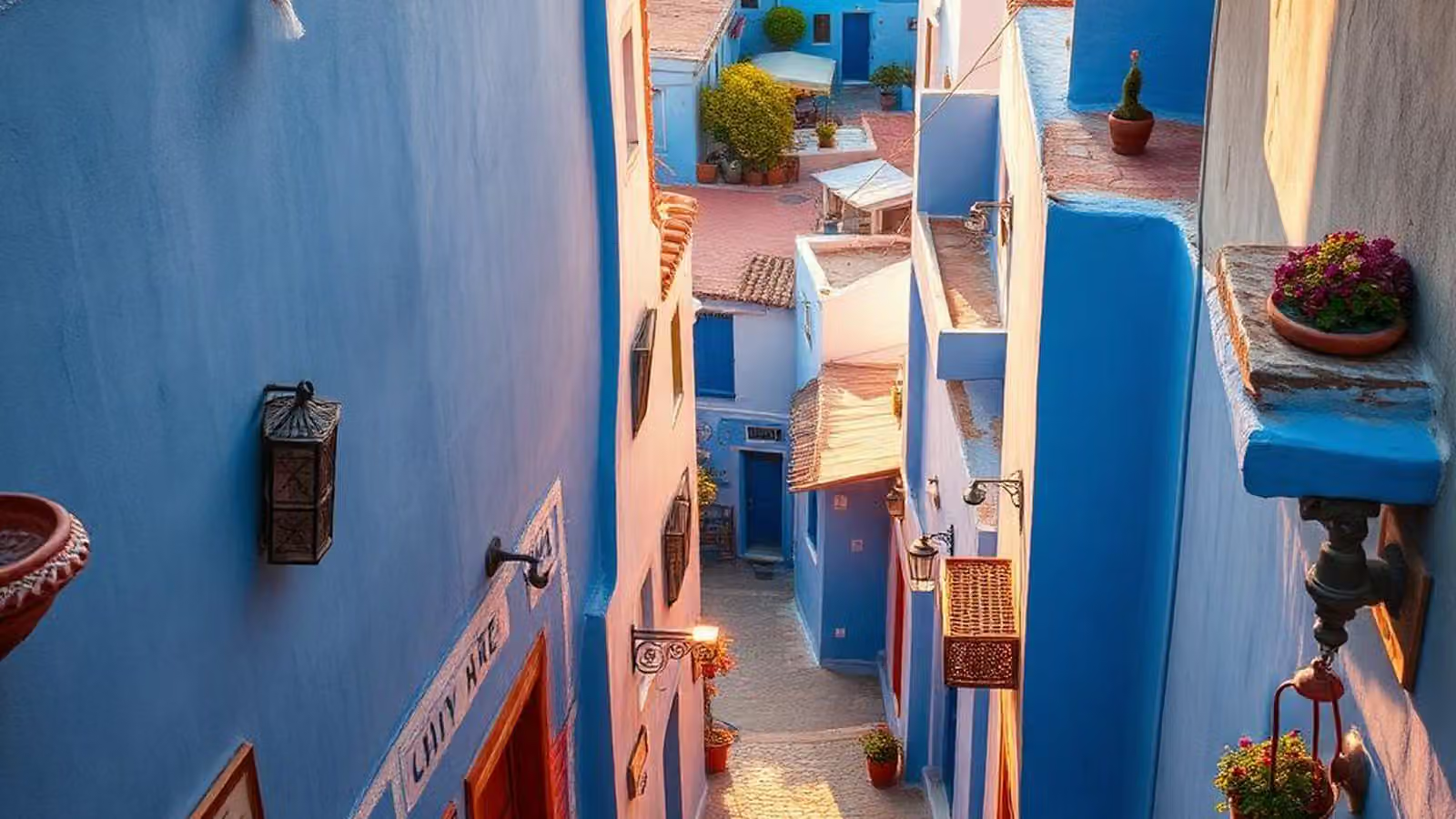

A blue-washed lane in Chefchaouen lined with painted doorways and potted plants
Morocco

Yoga & Wellness Retreats in Morocco

The Magic of Morocco

the country

Medina, mountains and Atlantic wind

Step into a world of vibrant souks, golden deserts, and ancient medinas. Morocco is a sensory feast, colorful spices, the call to prayer, and the scent of mint tea drifting through the air.

The flavor of saffron, cumin, and freshly baked bread will fill your senses as you sip mint tea in a hidden riad. Explore the labyrinthine streets of Marrakech, ride camels across the Sahara dunes of the Agafay desert, or wander the cultural gems of Essaouira.

The coastal charm of Essaouira and Morocco's rich traditions will leave you enchanted, marveling at towering minarets and losing yourself in the rhythmic beats of traditional Gnawa music. A local guide will escort you as you immerse yourself in the wonder that is magical Morocco.

A lantern-lit riad salon with tiled floors, arched doorways and low armchairs
the journeys

Our Moroccan retreats

Handpicked retreats across Morocco, each shaped around a distinct rhythm, landscape, and pace.

Mystical Morocco retreat imagery
8 DaysMorocco
The Magic of Morocco

Mystical Morocco

AccommodationTransport8 Days
Marrakech, Imlil & Essaouira retreat imagery
8 DaysMorocco
Medina, Mountains & Atlantic Coast

Marrakech, Imlil & Essaouira

AccommodationDaily Breakfast8 Days
an invitation

Come to Morocco to move slower, listen closer, and let the wild edges of the world reset your rhythm.

the retreats, up close

Marrakech riads to the High Atlas

Mystical Morocco retreat imagery
8 Days · The Magic of Morocco

Mystical Morocco

An eight-day immersion into Morocco's most soulful corners, riad courtyards, medina lanes, and the golden hush of the Agafay desert at dusk.

Marrakech, Imlil & Essaouira retreat imagery
8 Days · Medina, Mountains & Atlantic Coast

Marrakech, Imlil & Essaouira

From the color and clamor of Marrakech to the terraced calm of Imlil in the High Atlas, and finally to the Atlantic breeze and blue fishing boats of Essaouira.

planning a Morocco retreat

Choosing your month in Morocco

Morocco holds three climates in one itinerary, and a retreat that moves from Marrakech to the High Atlas to the Atlantic has to be planned for all three at once. The strongest windows are March to May and September to early November.

Spring is the best of it. The Atlas is still snow-capped, the valleys are green and full of blossom, Marrakech sits in the pleasant twenties, and the coast at Essaouira is bright and breezy. Autumn is drier and dustier but reliably warm, with the added benefit of a calmer coast than the windy summer months.

June to August brings serious heat inland; Marrakech can pass forty degrees Celsius, which is not a temperature to practise or walk a medina in. Essaouira stays remarkably cool thanks to the Atlantic wind, so a summer retreat is possible if it is coast-based, but the interior is best avoided. December to February is cold in the mountains, genuinely so at altitude, with short days and the chance of snow closing higher trails. Ramadan shifts each year and changes the rhythm of towns and restaurants; we plan around it or into it deliberately, never by accident.

What the practice looks like here

Morocco is a moving retreat, and the practice has to serve the journey rather than compete with it. In Marrakech that means a grounded morning session in a riad courtyard, where the air is cool and the walls keep the city out. In Imlil it means practising at altitude with a slower, breath-led approach on day one, because two thousand metres is enough to make a strong flow feel unreasonable before people acclimatise. On the coast it means a windy, salt-air session and a great deal of walking.

The most valuable thing a leader can build here is a decompression session on each arrival evening. The sensory load in a Marrakech medina is real, and a group that goes straight from the airport into the souks arrives at dinner overstimulated. Twenty minutes of breath work before anyone goes out changes the whole week.

Hammam is not a spa add-on in Morocco; it is a communal ritual with its own etiquette, and it lands best when it is briefed properly and placed after a physically demanding day rather than at the start.

Visas, flights and moving between the three landscapes

US and EU passport holders do not need a visa for tourist stays in Morocco of up to ninety days, though passports must be valid for the required period and each traveller should confirm the current rules for their nationality before booking. Morocco is not in Schengen, so an EU identity card is not enough; bring the passport.

Marrakech Menara is the main gateway, with dense low-cost connections from across Europe and one-stop routings from the US via Paris, Madrid, Lisbon or Casablanca. Essaouira has a small airport with limited European services, which is useful for a one-way itinerary that finishes on the coast.

On the ground, Marrakech to Imlil is a straightforward ninety-minute drive followed, at some properties, by a walk or mule transfer for the final stretch, which travellers should be told about clearly in advance. Marrakech to Essaouira is around three hours on a good road. We keep those transfers to the morning and never place one on the same day as a demanding hike.

Who Morocco suits, and who it does not

It suits travellers who want contrast in a single week and are happy to move, walkers who will enjoy a proper day in the Atlas, and groups drawn to culture, craft and food as much as to the practice. It suits European groups particularly well, given the short flight and the near-absence of a time difference.

It suits leaders who are comfortable holding a group through stimulation. Morocco gives a lot; the leader's job is pacing.

It does not suit travellers who want a single base, a pool and nothing on the schedule, and it does not suit anyone unwilling to dress modestly in towns and rural areas. Travellers with real mobility limitations should talk to us first: the medina, the mountain paths and many riads all involve steps and uneven ground.

What it realistically costs to get here

From Europe, Morocco is one of the cheapest long-weekend-distance destinations we work in: return fares to Marrakech frequently sit between 80 and 250 euros from the UK, France, Spain and the Low Countries. From the US, expect roughly 600 to 1,100 dollars return with a European connection, and more in the spring peak.

Budget cash for tipping, for guides in the medina and for the small purchases the souks are designed to encourage. Local costs are low relative to Europe, so the flight and the retreat itself, rather than day-to-day spending, dominate a traveller's budget.

For leaders, the low airfare from Europe is a genuine commercial advantage: it widens the pool of travellers who can say yes to a week away without the flight being the deciding factor.

Reading before your Morocco retreat

let's begin

Plan your Moroccan journey

Tell us the season, the pace, and the feeling you're chasing in Morocco, we'll shape the rest.