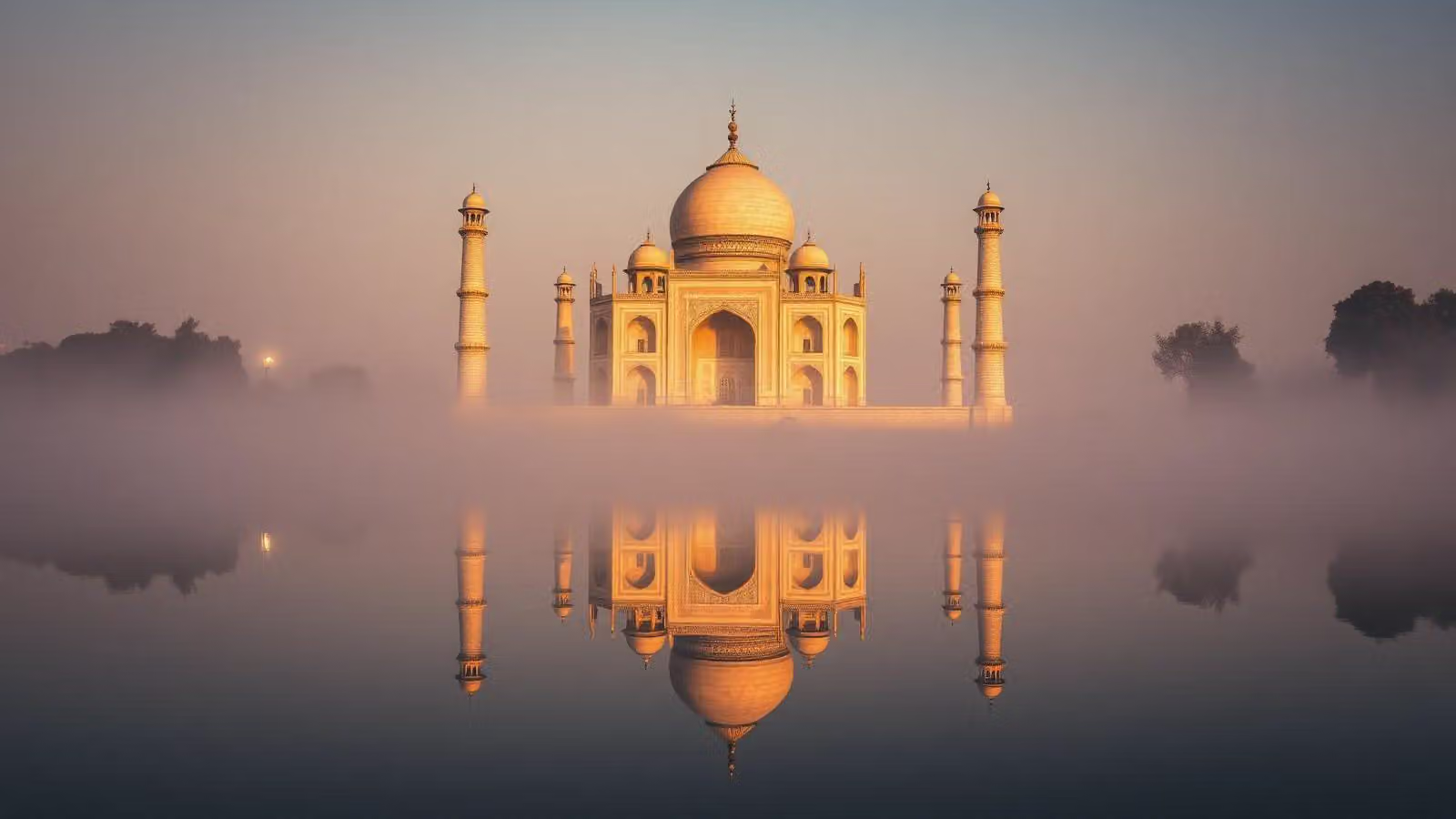
The Taj Mahal reflected in still water through early morning mist
India

Yoga & Wellness Retreats in India

Heritage, Wilderness & the Golden Triangle

the country

Where yoga was first spoken aloud

India arrives all at once: the call to prayer over Old Delhi, marigolds heaped in a courtyard, the hush of a marble tomb at first light. Our journeys move through the famed Golden Triangle of Delhi, Agra and Jaipur, and then out into the wilderness that most travelers never reach.

Stand before the Taj Mahal at sunrise, walk the red sandstone ramparts of Agra Fort, and trade monuments for tiger country on open jeep safaris through the dry forests and lotus-filled lakes of Ranthambore National Park.

Finish in Jaipur, the Pink City, where the honeycomb Hawa Mahal gazes over the bazaar and a Rajput family opens their kitchen to you. Heritage hotels, private drivers and unhurried days hold the whole journey together.

The pink sandstone facade of the Hawa Mahal in Jaipur
the journeys

Our Golden Triangle retreat

A boutique wellness journey shaped around the rhythm of India.

Golden Triangle with Ranthambore retreat imagery
8 DaysIndia
Delhi, Agra, Ranthambore & Jaipur

Golden Triangle with Ranthambore

AccommodationDaily Breakfast8 Days
an invitation

Come to India to move slower, listen closer, and let the wild edges of the world reset your rhythm.

the retreats, up close

Delhi, Agra, Ranthambore and Jaipur

Golden Triangle with Ranthambore retreat imagery
8 Days · Delhi, Agra, Ranthambore & Jaipur

Golden Triangle with Ranthambore

Eight days through Northern India, the Taj Mahal at sunrise, two jeep safaris in search of Bengal tigers, and the pink light of Jaipur.

planning a India retreat

Choosing your month in India

India is not one climate and it is not one season. For the north, which is where our Golden Triangle and Ranthambore journey runs, the workable window is roughly late October to the middle of March. Within that window the differences matter more than most first-time visitors expect.

Late October and November are the softest weeks: daytime temperatures in Rajasthan sit comfortably in the high twenties Celsius, mornings are clear, and the light after the monsoon is the best of the year for photography. December and January bring genuinely cold dawns in Delhi and Agra, sometimes single figures, along with morning fog that can delay road transfers and domestic flights. It is still a beautiful time to travel, but you practise in layers and you build slack into the schedule.

February is our quiet favourite. The fog has lifted, the parks are dry enough that wildlife concentrates around water, and the crowds of the Christmas period have gone home. By late March the heat starts to assert itself, and from April onward central Rajasthan becomes punishing for a group that wants to move around rather than stay by a pool. We do not run northern India between May and September; the monsoon and the pre-monsoon heat make it the wrong trip.

What the practice looks like here

India rewards an early rhythm. Practice sits at first light on a terrace or in a garden pavilion, before the day warms and before the roads outside wake up. That earliness is not tradition for its own sake: from about nine in the morning the heat and the noise change the quality of a room.

Groups here almost always shift towards a quieter, more internal practice than they planned. Long travel days, dense sensory input and an unfamiliar diet all argue for restorative work, pranayama and a proper yoga nidra in the afternoon rather than a second strong flow. Leaders who plan two vigorous sessions a day usually drop one by the third morning, and the retreat improves for it.

There is also a reason to keep the container honest. Travellers arrive with a lot of ideas about yoga in India, and the useful thing a leader can do is hold their own teaching steadily while letting the country be the country. A visit to a temple at dawn, or an hour of chanting with a local musician, lands far better as an encounter than as a performance staged for the group.

Visas, flights and travel days for US and EU travellers

Both US and EU passport holders need a visa for India. The e-Visa is applied for online in advance and is the route almost all of our travellers take; it is straightforward but it is not instant, so apply several weeks out rather than the week before and expect to upload a photograph and a passport scan. Requirements do change, so each traveller should check the current rules for their own nationality rather than copying a groupmate.

Passports need validity well beyond the return date and blank pages for stamps. Speak to a travel health professional early, because some recommended vaccinations are given as a course rather than a single appointment.

The internal geography is the part people underestimate. Delhi to Agra to Ranthambore to Jaipur looks compact on a map and is not: expect several road transfers of four to six hours, some on excellent expressway and some not. We plan those as part of the itinerary rather than as dead time, and we never stack two long drives back to back.

Who India suits, and who it does not

It suits curious travellers who want the country as much as the practice, groups who have already travelled together at least once, and leaders confident enough to hold a room where several people are having a big week emotionally. It suits anyone who has wanted to see tigers and would rather do it alongside a real practice than from a tour bus.

It does not suit a group that mainly wants rest. If the brief is stillness, a pool and one place for seven nights, India is the wrong answer and Portugal or Greece is the right one. It is also a difficult first international retreat for a leader who has never run one, simply because there are more moving parts than in a single-base European week.

What it realistically costs to get here

Return economy flights from the US east coast to Delhi typically run from around 900 to 1,400 US dollars in the shoulder months, rising over Christmas and New Year; from the west coast, add a few hundred and an extra connection. From western Europe the picture is friendlier, with direct services from London, Paris, Frankfurt and Amsterdam often falling between 550 and 900 euros return in the same period.

Beyond the airfare, budget for the e-Visa fee, travel insurance that covers your actual activities, and a modest amount of cash for tipping drivers and guides, which is customary and appreciated. Once you are on the ground India is inexpensive by European or American standards, so the flight is genuinely the largest variable in a traveller's own budget.

For leaders pricing a retreat, the practical implication is that the flight is not yours to control but the travel days are. Groups forgive an expensive ticket. They do not forgive arriving at a hotel at midnight before a seven o'clock practice.

let's begin

Ask about travelling India

Tell us the season, the pace, and the feeling you're chasing in India, we'll shape the rest.