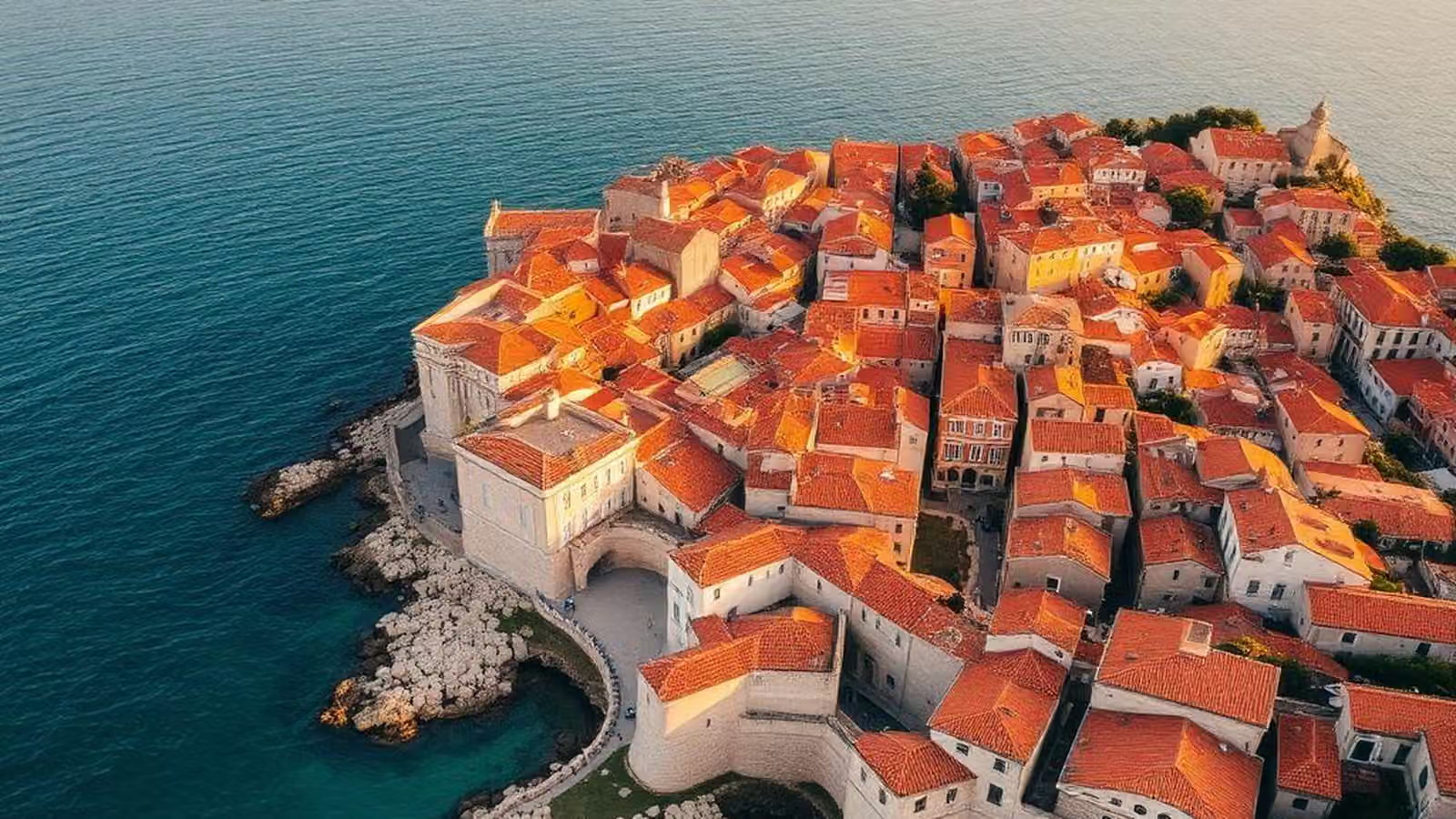
Terracotta rooftops of Dubrovnik's walled old town on the edge of the Adriatic
Croatia

Yoga & Wellness Retreats in Croatia

Coastal Wellness in Croatia

the country

A coastline of stone cities and clear water

Step into a world of breathtaking beauty on an unforgettable journey through Dubrovnik and Split, or focus your restorative practice solely along Dubrovnik's storied shores. From the sparkling Adriatic Sea to sun-drenched vineyards and centuries-old stone walls, every moment is designed to awaken your senses and restore your spirit.

Begin your days with ocean-view yoga and healing practices that ground and energize. Wander through ancient city streets, savor the rich flavors of Dalmatian cuisine, and sip local wines in coastal wineries nestled among olive groves.

Cruise the nearby archipelago, swim in turquoise coves, and soak in the magic of Croatia's timeless charm, a soul-nourishing journey through culture, nature, and inner peace, and the perfect escape to rejuvenate mind, body, and spirit.

An infinity pool and timber deck looking out over the Adriatic at dusk
the journeys

Our Dalmatian coast retreat

A boutique wellness journey shaped around the rhythm of Croatia.

Sea & Serenity retreat imagery
7 DaysCroatia
Dubrovnik & Split Coastal Retreat

Sea & Serenity

AccommodationDaily Breakfast & Dinner
an invitation

Come to Croatia to move slower, listen closer, and let the wild edges of the world reset your rhythm.

the retreats, up close

Dubrovnik walls to Split harbours

Sea & Serenity retreat imagery
7 Days · Dubrovnik & Split Coastal Retreat

Sea & Serenity

A seven-day Adriatic escape moving between the walled beauty of Dubrovnik and the golden light of Split. Days begin with ocean-view yoga and breathwork, followed by long swims in turquoise coves and unhurried walks along limestone shores.

Wander ancient city streets, sail into the nearby archipelago, and share Dalmatian feasts in family konobas and coastal wineries tucked among olive groves, a retreat woven from sea, stone, and stillness.

planning a Croatia retreat

Choosing your month in Croatia

The Dalmatian coast has a short, excellent season and it is worth being precise about it. Late May to the end of June, and September to early October, are the two windows we plan around.

June gives long light, warm air and a sea that has finally caught up with the weather, along with a coastline that is busy but not yet saturated. September is the connoisseur's month: the Adriatic is at its warmest after a summer of heating, the coastal towns are calm again, and the light on the stone in the late afternoon is remarkable.

July and August are hot and extremely crowded; the old towns become difficult to move a group through and prices roughly double. From November to April much of the island infrastructure closes, ferries reduce to a winter timetable, and the bura wind can bring cold, clear, blustery days. Beautiful for a writer. Wrong for a retreat that needs its group outdoors.

What the practice looks like here

Croatia is a water and stone practice. Mornings on a terrace above the sea, an afternoon in the water, and an evening session as the heat leaves the rock. Because the humidity is lower than in the tropics, groups tolerate a stronger morning flow here than they do in Central America or India.

The coast lends itself to movement between practices: swimming, sea kayaking, a coastal walk between villages. Retreat leaders should decide early whether the week is a single-base rest retreat or an active one, because both work in Dalmatia and mixing them badly produces a schedule that exhausts half the group and bores the other half.

Sound carries in stone villages and old-town squares stay lively late. If your programme includes a dawn practice or silence, that has to shape the choice of base, and it is a question worth asking before falling for a photograph of a harbourside villa.

Flights, borders and getting between islands

Croatia is both an EU member and part of the Schengen area, so EU travellers need only an identity card or passport. US passport holders may currently visit for up to ninety days in any one-hundred-and-eighty-day period without a visa, with the EU's planned online authorisation for visa-exempt travellers due to add a step; check the rules in force for your dates.

Split and Dubrovnik are the main coastal gateways, with Zagreb useful when fares favour it. Direct European services are plentiful in summer and thin out sharply in winter, so the season affects your flight options as much as the weather.

Island travel is by catamaran or car ferry, and the two are not interchangeable: catamarans are fast and passenger-only, car ferries are slower and take vehicles and luggage more comfortably. Timetables change between the summer and winter schedules. We build the crossings into the itinerary and leave a wide margin on the way back to the airport.

Who Croatia suits, and who it does not

It suits active groups, swimmers and walkers, mixed European and North American groups who want a short internal flight rather than a long-haul, and leaders who want an easy first international retreat with excellent infrastructure and widely spoken English.

It suits travellers who like historic towns as part of the week: Dalmatia gives you a genuine, lived-in medieval coast rather than a preserved one.

It does not suit travellers wanting complete seclusion in peak season, and it does not suit anyone who needs guaranteed step-free access, since the old towns and many villas are built on and out of steep rock.

What it realistically costs to get here

Within Europe, return fares to Split or Dubrovnik in June and September usually fall between 90 and 280 euros, with the low-cost carriers driving the market. From the US, expect roughly 750 to 1,300 dollars return in shoulder season with one European connection; direct seasonal services from a few US cities appear in summer at a premium.

Budget an extra 30 to 80 euros per person for ferry crossings if the itinerary includes an island, and remember that Croatia uses the euro, which has simplified group budgeting considerably since the changeover.

On the ground, coastal Croatia is no longer a bargain destination in July and August, but in the shoulder months restaurant and accommodation prices sit noticeably below the Italian or French Mediterranean for a comparable standard.

let's begin

Ask about the Adriatic

Tell us the season, the pace, and the feeling you're chasing in Croatia, we'll shape the rest.