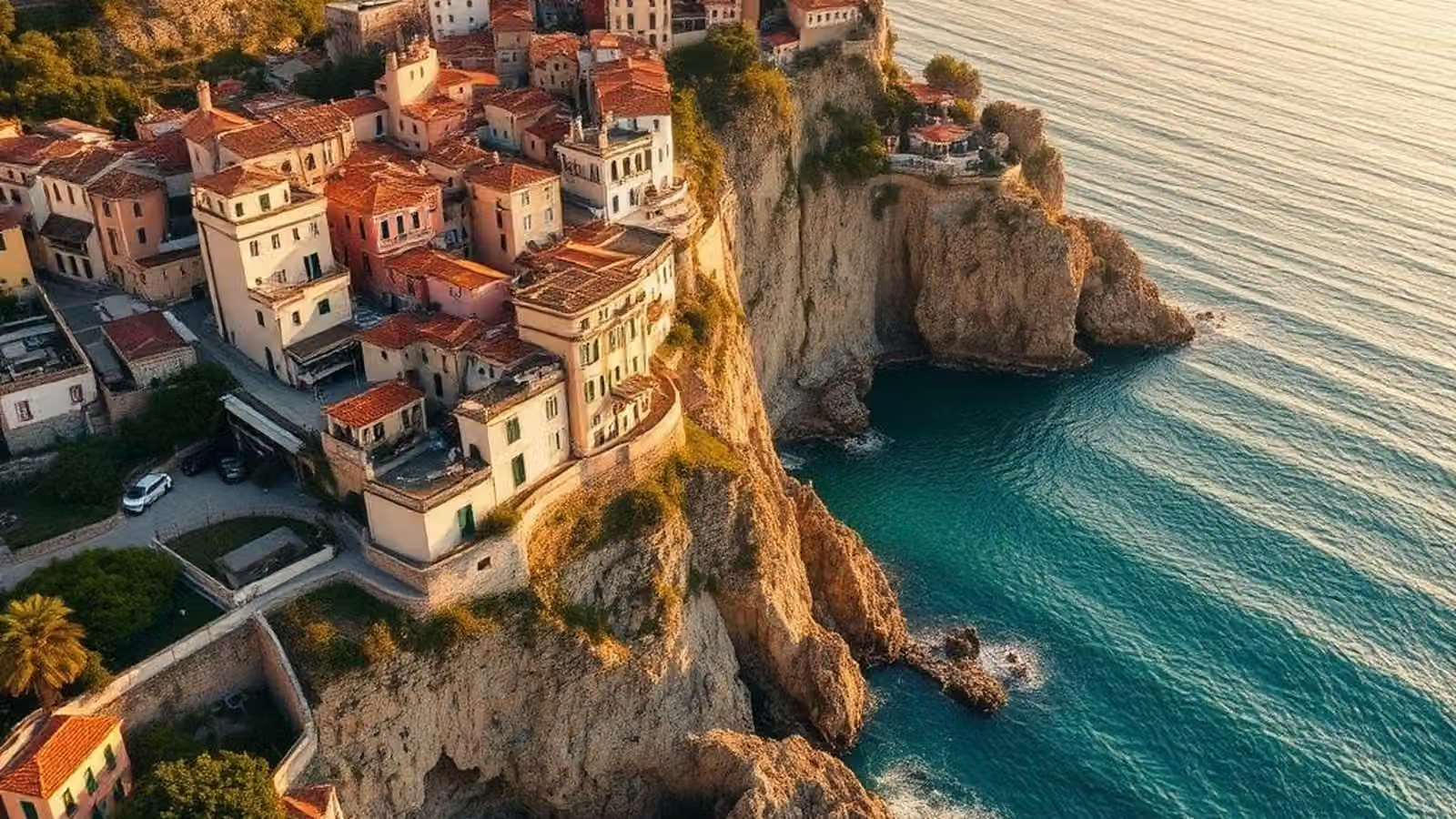
A cliffside Italian village of ochre houses above clear coastal water
Italy

Yoga Retreats in Italy: Sicily

Soulful Escapes Across Italy

the country

Sicily is its own country in spirit

Italy is a country that treats a table as a place of worship, from sun-baked Sicilian courtyards to pastel villages perched above the Mediterranean, every day is shaped around beauty, food, and unhurried company.

Our Italian journeys move at the pace of a long lunch: mornings of gentle practice, afternoons of coastal walks and boat days, and evenings under the vine with wine that came from the hill you just walked.

It's the art of Italian living, small family estates, quiet piazzas, and the kind of hospitality that has been perfected across generations.

Orange trees and a shaded terrace table looking over the Sicilian hills
the journeys

Our Sicilian retreat

A boutique wellness journey shaped around the rhythm of Italy.

The Essence of Sicily retreat imagery
7 DaysItaly
Sun, Sea & Sicilian Soul

The Essence of Sicily

AccommodationDaily Dinner
an invitation

Come to Italy to move slower, listen closer, and let the wild edges of the world reset your rhythm.

the retreats, up close

Volcanic soil, sea salt and Sicilian tables

The Essence of Sicily retreat imagery
7 Days · Sun, Sea & Sicilian Soul

The Essence of Sicily

A seven-day immersion into the heart of Sicily, an island where volcanic peaks meet turquoise coastlines, lemon groves scent the air, and every meal is a slow celebration of the land.

Days unfold between morning yoga in stone courtyards, coastal walks, boat days along hidden coves, and long Sicilian dinners shared under the stars, an unhurried journey into the essence of Italian living.

planning a Italy retreat

Choosing your month in Italy

Our Italian retreats run in Sicily, and Sicily has a longer usable season than mainland Italy but a sharper summer. The two best stretches are late April to mid-June, and mid-September to the end of October.

Spring is green in a way most visitors do not expect from the island: wildflowers across the interior, sea temperatures still bracing, and the almond and citrus country at its best. Late September and October give you warm water, a harvest landscape and evenings that are still long enough to eat outside. Both windows sit comfortably in the low to mid twenties Celsius for practice.

July and August are hot, busy and expensive, and the mid-afternoon becomes something to hide from rather than plan around. November through March is quiet and inexpensive, with genuinely mild coastal days, but you should expect rain weeks and shorter light, which makes it better for a writing or silence-led retreat than for a group that wants to be outdoors all day.

What the practice looks like here

Sicily encourages a two-anchor day: a longer morning practice while the stone is still cool, and a slower restorative session or a sunset meditation once the heat drops. The middle of the day belongs to the table, to the sea, or to sleep, and a schedule that fights this loses.

Practice spaces on the island tend to be terraces, courtyards and converted agricultural buildings rather than purpose-built shalas. That is part of the character, and it also means a leader should ask concrete questions in advance: what the floor is, whether there is shade at eight in the morning, how many mats fit without touching, what happens if it rains.

The other thing Sicily does well is food as part of the practice rather than a break from it. A morning at a market followed by cooking together lands as a genuine session for most groups, particularly on a retreat where the theme is nourishment or reconnecting with appetite.

Flights, paperwork and getting around

EU citizens travel to Italy on an identity card or passport with no visa. US passport holders may currently visit for up to ninety days in any one-hundred-and-eighty-day period without a visa, under the Schengen rules; the EU's forthcoming travel authorisation for visa-exempt visitors will add an online step, so check the current position before you book.

The island has two main gateways, Palermo and Catania. Both take direct low-cost flights from across Europe, and both connect to the US through Rome, Milan or a northern European hub. Which airport you fly into changes the shape of the week, because the drive between the two sides of the island is around three hours; we set the arrival airport before anything else is confirmed.

Transfers on the ground are by minibus. Sicilian roads are good on the main routes and slow on the pretty ones, which is a reason to build a retreat around one or two bases rather than moving every second night.

Who Sicily suits, and who it does not

It suits groups who want culture, food and coastline in the same week, mixed-ability groups where not everyone wants a strenuous programme, and leaders looking for a first international retreat with a short flight from most of Europe and familiar infrastructure.

It suits travellers who like an unpolished kind of beauty. Sicily is not manicured; there is graffiti, there are half-finished buildings, and the ferry timetable is a suggestion. Travellers who want a resort finish should be sent to a resort.

It does not suit a group wanting wilderness or solitude at peak season, and it does not suit anyone whose main criterion is guaranteed swimming weather in April.

What it realistically costs to get here

From within Europe, return fares to Palermo or Catania frequently sit between 80 and 250 euros in the shoulder seasons, which is why Italian retreats fill quickly with European travellers. Book the outbound for late morning rather than the cheapest dawn departure; a group that starts the week at four in the morning is a group that sleeps through day two.

From the US, expect roughly 700 to 1,200 dollars return in spring and autumn, almost always with one European connection. Travellers arriving from North America should plan a night in Palermo or Catania before the retreat begins; the time difference is enough that skipping it costs them the first two days.

On the ground, Sicily remains one of the better-value corners of western Europe: a good lunch is still modest money, and local transport, wine and market shopping all cost less than the mainland equivalents.

let's begin

Ask about Sicily

Tell us the season, the pace, and the feeling you're chasing in Italy, we'll shape the rest.