
From the Journal
Yoga Retreat vs Yoga Teacher Training: Which Is Right for You?
At some point, many people who love yoga start to wonder about going further. Should you book a yoga retreat, or sign up for a teacher training? Both involve travel, lots of practice and a group of like-minded people, but they are built for very different goals. Here is how yoga retreat vs yoga teacher training compares on time, cost, workload and outcome, and how to choose.
Yoga retreat vs yoga teacher training: the short answer
A yoga retreat is a break built around practice and rest, usually lasting a few days to a week, with free time and no homework. A 200-hour yoga teacher training is a structured course in technique, philosophy, anatomy and ethics that prepares you to teach. Choose a retreat if you want to rest and deepen your own practice. Choose a training if you want to teach or study yoga in a formal, systematic way.
Side by side
| Yoga retreat | 200-hour yoga teacher training | |
|---|---|---|
| Main goal | Rest, practice and time away | Learning to teach, and studying yoga in depth |
| Length | Often a weekend to a week | 200 hours of training |
| A typical day | One or two classes, meals, outings and free time | Practice, study, practice teaching and assignments |
| Cost | Retreat Guru's 2026 report puts the median for most multiday retreats at $90 to $205 per day | Yoga Alliance says schools set their own tuition, from $1,500 to $5,000 or more |
| Outcome | A rested body and mind, and a renewed practice | A certificate, and eligibility to register as an RYT 200 if the school is registered with Yoga Alliance |
| Pressure | None: everything is optional | Assessments and a commitment to attend |
Cost figures from the sources linked in this article. Flights and accommodation may be extra for both.
What a 200-hour yoga teacher training involves
Yoga Alliance describes its RYT 200 credential on its training options page as "the foundational 200-hour training that provides a strong base in yoga techniques, philosophy, anatomy, and ethics." According to its standards for RYT credentials, registering as an RYT 200 requires completing a 200-hour training with a Registered Yoga School (RYS 200), and members must complete continuing education hours and pay annual membership dues to keep the credential.
Interestingly, the same standards list no teaching requirement for the RYT 200. You can complete a training simply to deepen your understanding, but it is a real commitment of time, money and study, with practice teaching and assessments along the way.
What a yoga retreat involves
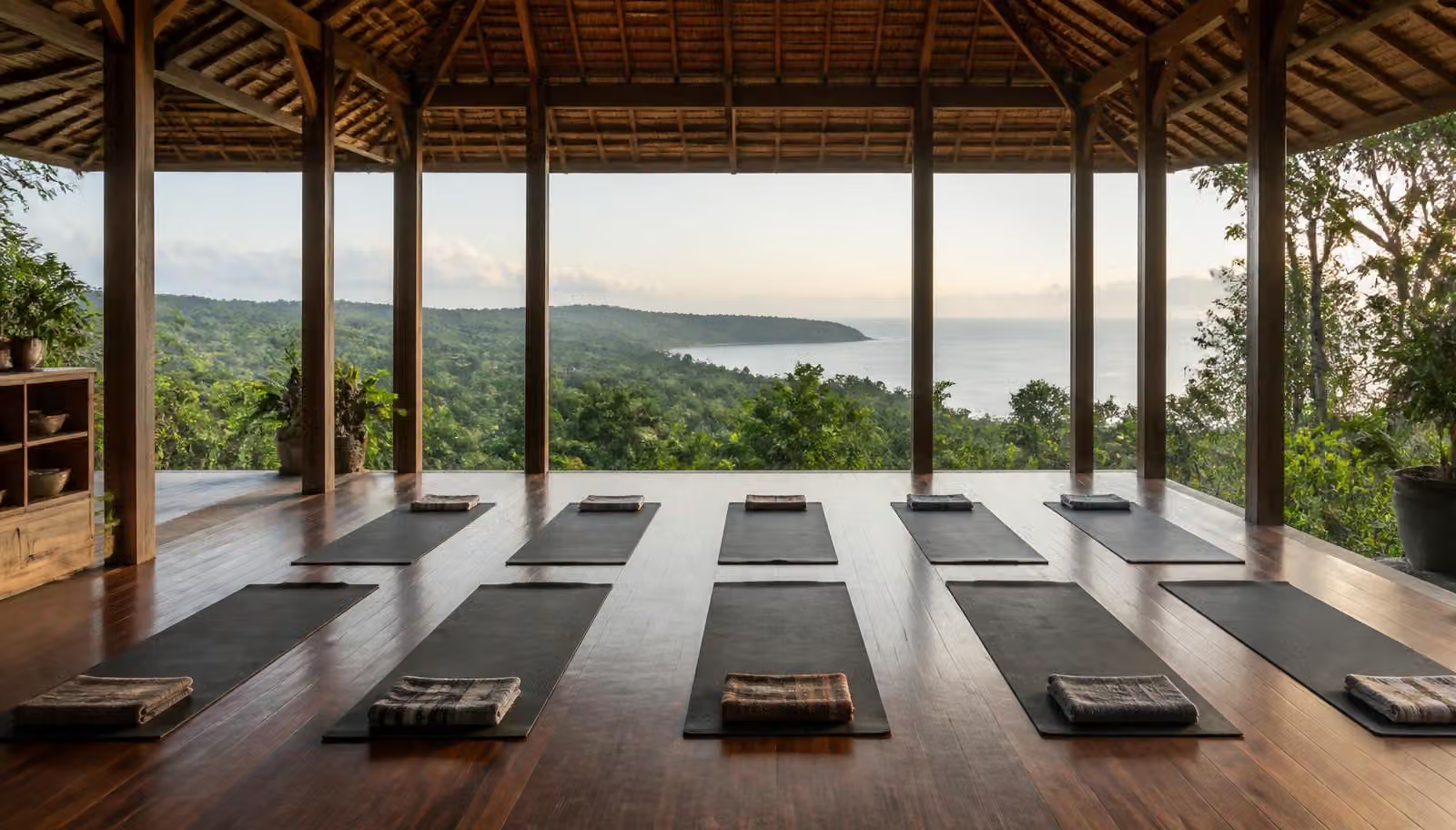
A retreat is built for rest as much as practice. A typical day has a morning class, an evening session, shared meals and time to explore or do nothing at all, and every class is optional. Retreat Guru's 2026 industry report found that for most multiday retreats, the median price falls between $90 and $205 per day.
Most of our retreats run six to eight days, and their itineraries mix yoga with outings, free afternoons and time with the group. Our sample yoga retreat itinerary shows a typical week, and our guide to what to expect on your first retreat covers the rest.
Choose a yoga retreat if...
- You want to rest as much as you want to practice.
- You would like to deepen your practice without studying anatomy, philosophy and teaching methods.
- You have a week, not a month, to spare.
- You want to travel somewhere new with the logistics taken care of.
- You want everything to be optional, including the classes.
Choose a yoga teacher training if...
- You want to teach, now or one day.
- You want to study yoga's techniques, philosophy and anatomy in a structured way.
- You are ready for assignments, practice teaching and assessment.
- You can commit the time, whether that is an intensive format or a training spread over many weekends.
- You want a recognized credential, such as the RYT 200.
Can a retreat deepen your practice without a training?
Yes. A week of daily practice with one teacher, a theme that runs through the week and time to reflect can do a great deal for your practice. Look for a retreat with a clear practice arc and teachers who explain the why behind each class. Our guide to yoga and meditation retreats explains the styles you will meet, our yoga retreat class plan shows how a good week is sequenced, and our guide to what to do after a yoga retreat helps you keep the practice going at home.

Use a retreat to test the idea of training
If you are on the fence, a retreat is a good place to find out what draws you. Pay attention to which parts of the week you love most: the flow of a well-sequenced class, the philosophy talks, the anatomy cues or simply the daily practice itself.
- Ask the teacher about their own training, what it involved and what they would do differently.
- Notice what you want more of. Curiosity about sequencing, philosophy or anatomy is a good sign that a training would suit you.
- Keep a practice journal during the week. Our yoga retreat journal prompts include prompts for after each practice.
- Ask for reading suggestions, so you can start learning before you commit to a course.
Questions to ask before you choose
- For a training: Is the school a Registered Yoga School? Who are the lead trainers, and what is their experience? What is the schedule, and how are trainees assessed? What is the refund policy?
- For a retreat: How many hours of yoga are there each day? What styles and levels? What is included in the price? What is the cancellation policy?
Our list of 25 questions to ask before booking a yoga retreat covers the retreat side in detail, and our guide to how much a yoga retreat costs explains typical prices and inclusions.
From teacher training to leading your own retreat
For many teachers, leading a retreat is a natural next step after training. It takes planning: a venue, a price, an itinerary and a way to fill the spaces. Our guides on how to plan a yoga retreat and how much to charge for a yoga retreat are good places to start.
Yoga retreat vs yoga teacher training: making the choice
If your heart says rest, practice and somewhere beautiful, choose a retreat. If it says study, teach and commit, choose a training. And if you are not sure, a retreat is a lower-commitment way to spend a week practicing every day and see how deep you want to go. As a yoga retreat hosting company, we run retreats for students and plan them with teachers. Browse our yoga retreat destinations, or contact a retreat planner. Teachers can explore our retreat planning services and our free guide on how to host a yoga retreat abroad.
Essential inquiries


Planning a retreat of your own?
Tell us about your group, your dates and the feeling you want the week to have. We will tell you honestly what it takes, what it costs, and where we would send you — even when the answer is somewhere we do not run.
- A real conversation, not a sales call
- Honest costing before you commit
- Itineraries shaped around your people