
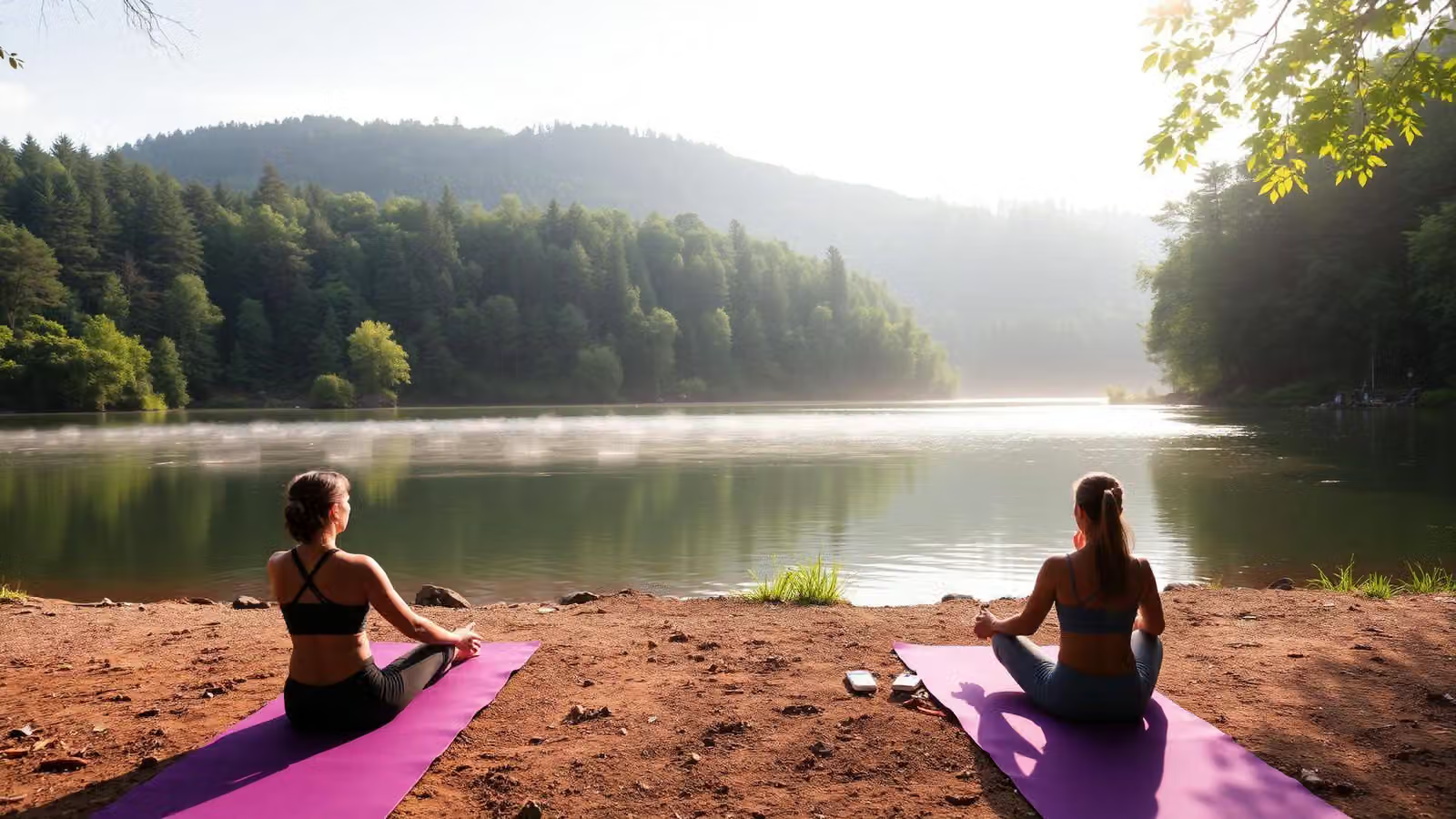
From the Journal
What to Expect on Your First Wellness Retreat
Most people booking a first retreat have two quiet worries, and neither of them is about the yoga.
The first is the schedule: whether it will be six hours of practice a day, or so little that the trip was not worth it. The second is the group: whether everyone will already know each other, whether they will all be twenty-five and bendy, and whether there is anywhere to go if you need an hour alone.
Here is what a week actually looks like.
A realistic day
Most wellness retreats settle into a rhythm within about forty-eight hours. A typical day runs something like this.
Morning practice before or just after breakfast, usually the longest session of the day, around ninety minutes. Breakfast afterwards, unhurried. Then the middle of the day is the part people do not expect: it is largely yours. Some days there is an excursion, a hike, a market, a boat. Other days there is nothing scheduled at all.
Late afternoon brings a second, gentler session, often restorative or a slower flow, sometimes breathwork or meditation instead. Then dinner, long and shared, and an early night because most people are more tired than they expect.
That is roughly two to three hours of formal practice in a day, not six. The rest is rest, which is the point.
How much of it is compulsory
Almost none of it. Nobody takes attendance. If you want to skip the afternoon session and read by the pool, that is a normal thing to do and a good teacher will not make it awkward.
The exception is anything with a shared cost or a fixed booking: a cooking class, a private boat, a guided hike with a driver waiting. Those benefit from being told in advance if you are opting out, purely so the logistics work.
A word on the arc of the week. Most people arrive intending to do everything and by day three have quietly decided which parts matter to them. That is not failure. It is what a week off is for.
Who else comes

Overwhelmingly, people who booked alone.
This surprises almost everyone. On a typical small retreat, most guests arrive solo, a few come as pairs, and occasionally there is a small group of friends. The solo travellers are not the exception. They are the majority, and they are all mildly nervous on the first evening for exactly the same reason you are.
Ages run wider than the marketing images suggest, usually somewhere between the mid-thirties and the mid-sixties, with plenty of outliers. Groups of eight to fourteen are small enough that you will know everyone's name by the second day, which is either the appeal or the anxiety, depending on your temperament.
Whether you are experienced enough
Yes, on almost any retreat that describes itself as wellness rather than teacher training or advanced practice.
Mixed-ability groups are the norm, and a competent teacher will offer variations rather than one prescribed shape. Nobody is watching you. Everybody is thinking about their own hamstrings.
What matters more than flexibility or experience is honesty about injuries and limitations. Tell the teacher at the start, not on day four when something hurts. If you have a specific concern, ask before booking, and if you want to check a teacher's credentials, Yoga Alliance maintains a directory of registered teachers and schools.
Physical demands vary by destination more than by practice level. A safari retreat in Botswana asks little of you physically. A week in the Atlas Mountains involves real walking. Read the itinerary rather than the brochure language.
Rooms, and the single supplement
If you are travelling alone you will usually be offered two options: share a twin room with another solo guest of the same sex, or pay a single supplement for your own room.
The supplement exists because a room costs the same whether one person or two are in it. It is not a penalty for being single, though it can feel like one. If a private room matters to you, budget for it from the start rather than hoping for a free upgrade.
Sharing works better than people expect on a retreat, largely because everyone is out of the room most of the day. But if you know you need your own space to sleep or decompress, take the supplement. A week of poor sleep undoes the rest of it.
What is included and what is not
Read this part of any retreat page carefully, because it varies more than anything else.
Usually included: accommodation, all or most meals, all scheduled practice, airport transfers, and the excursions named in the itinerary.
Usually not included: flights, travel insurance, visas where they apply, alcohol, spa treatments and massages, tips for local staff and guides, and anything you choose to do during free time. Massages in particular are often assumed to be part of a wellness retreat and are frequently a separate cost.
Budget something for tipping. On retreats with local guides, drivers and house staff, it is customary and it is rarely built into the price.
Food, and dietary requirements

Full board is standard, and the food is often one of the highlights. Most retreats cook fresh, local and largely vegetarian, with fish or meat depending on the destination.
Say what you need at the point of booking, not on arrival. Coeliac, vegan, allergies, anything medical. A retreat cooking for twelve people in a villa can accommodate almost anything with notice and very little without it, because the shopping is done before you land.
If you have a serious allergy, put it in writing and confirm it has been received. That is not being difficult. That is how a good kitchen wants to hear it.
Practical things worth knowing before you go
Travel insurance is not optional. Many retreats require it, and you want a policy with cancel-for-any-reason cover, because the deposit is usually non-refundable. The insurance we point guests to covers that.
Check entry requirements early. Passport validity rules catch people out more than visas do. Several countries require six months of validity beyond your entry date. Check the current advisory and entry requirements for your destination well before you book flights.
Pack less than you think, plus one warm layer. Even hot destinations get cold at altitude or after dark. Bring your own mat only if you strongly prefer it; most retreats provide them.
Expect to be offline more than usual. Not always by design. Rural villas and remote islands have the internet they have. This tends to be the part people are most resistant to and most grateful for.
What people actually take home
Ask returning guests what they remember and it is rarely a posture. It is a specific meal, a conversation on the third evening, a swim, the quiet of a particular morning.
A retreat works less because of the practice hours than because a week of small, unhurried decisions resets something. That is worth knowing when you are comparing itineraries and counting how many yoga sessions each one lists.
Choosing one
If you are deciding where, start with how far you want to travel and what kind of landscape you want to wake up in, rather than the practice style. Our destinations are grouped by region, and each retreat page carries the full day-by-day itinerary so you can see how much is scheduled and how much is yours.
For a gentler first trip, somewhere like the Azores or Paros asks very little of you logistically. If you want somewhere that feels genuinely far from home, Bhutan or Namibia do that.
If you are travelling with your own group and want the week built around it, tell us what you have in mind. Or get in touch with any question, including the ones you think are too small to ask.
Essential inquiries

Planning a retreat of your own?
Tell us about your group, your dates and the feeling you want the week to have. We will tell you honestly what it takes, what it costs, and where we would send you — even when the answer is somewhere we do not run.
- A real conversation, not a sales call
- Honest costing before you commit
- Itineraries shaped around your people