
From the Journal
Caribbean Yoga Retreat or Pacific Coast? Dominica, Panama and Costa Rica Compared
A Caribbean yoga retreat sounds like one simple idea: warm water, palm trees and morning practice to the sound of the sea. In practice, which island you choose, and even which coast you are on, changes almost everything about the week: the weather in your month, the risk of a hurricane, how long it takes to get there and what you do between sessions.
Our three tropical retreats show the range. Dominica is a volcanic island of rainforest and waterfalls in the eastern Caribbean. Bocas del Toro is an archipelago on Panama's Caribbean coast. Our Costa Rica retreat sits on the other side of Central America, on the Pacific coast of Guanacaste, and that difference matters more than most people expect. Here is how they compare.
Which Caribbean yoga retreat suits you? The short answer
Choose Dominica for rainforest, waterfalls and culture, ideally between January and May.
Choose Bocas del Toro in Panama for a water-based week of snorkeling, boat days and plenty of practice, with low hurricane risk but no true dry season. Choose Costa Rica's Pacific coast for the easiest travel from the US and a reliable dry season from December to April.
Dominica, Panama and Costa Rica at a glance
| At a glance | Dominica | Panama: Bocas del Toro | Costa Rica: Tamarindo |
|---|---|---|---|
| Coast | Eastern Caribbean island | Caribbean | Pacific |
| Length | 7 days, 6 nights | 7 days, 6 nights | 7 days, 6 nights |
| Base | Rosalie Bay Resort, an oceanfront eco-resort | Bluff Beach Retreat on Isla Colón | Hotel Jardin Del Eden in Tamarindo |
| Fly into | Douglas-Charles (DOM) | Bocas del Toro (BOC), via Panama City | Liberia (LIR), about an hour away |
| Drier months | About January to May | No true dry season; February, March and September are drier | December to April |
| Hurricane risk | In the hurricane belt; season June 1 to November 30 | Outside the hurricane belt | Direct hits are very rare |
| Pace | Active: hikes, waterfalls, culture | Water-based, with plenty of practice | Relaxed, with ceremony and sound |
| Best for | Hikers and nature lovers | Swimmers and snorkelers | First-timers and easy travel |
Caribbean or Pacific: why the coast matters
Costa Rica and Panama both have two coastlines, and their weather runs on different calendars. On the Pacific side, Guanacaste is Costa Rica's most arid region, with a clear dry season from December to April and a green season of sunny mornings and afternoon showers from May to November, according to Costa Rica Experts. The Caribbean side is humid and rainy for much of the year, with a break in September and October.
Bocas del Toro follows the Caribbean pattern. Journey Latin America notes that the islands have no real dry season, that February and March are the driest months, and that September has far less rain than October to December. Rain there tends to come in short, heavy bursts that clear quickly.
So the coast you choose should follow your dates. If you are traveling between December and April, the Pacific coast is hard to beat. If your dates fall in September, the Caribbean side of Panama is often the better bet.

Hurricane season and your Caribbean yoga retreat
The Atlantic hurricane season runs from June 1 to November 30. According to the National Hurricane Center, its peak is September 10, with most activity between mid-August and mid-October.
The three retreats sit in very different places relative to that risk. The State Department notes that Dominica regularly experiences hurricanes, with the season peaking from August to October. Bocas del Toro, far to the southwest, lies outside the hurricane belt and can be visited year-round. Costa Rica is rarely hit directly: when Hurricane Otto struck in November 2016, NOAA recorded it as the first hurricane on record to move over any part of the country.
If you book a tropical retreat for late summer or fall, buy travel insurance as soon as you pay your deposit. Squaremouth explains that to be covered for a hurricane, you generally need to buy your policy before the storm is named or forecast. Our guide to writing a yoga retreat cancellation policy explains how hosts handle storms and other events outside anyone's control.
Dominica: rainforest, waterfalls and the Kalinago
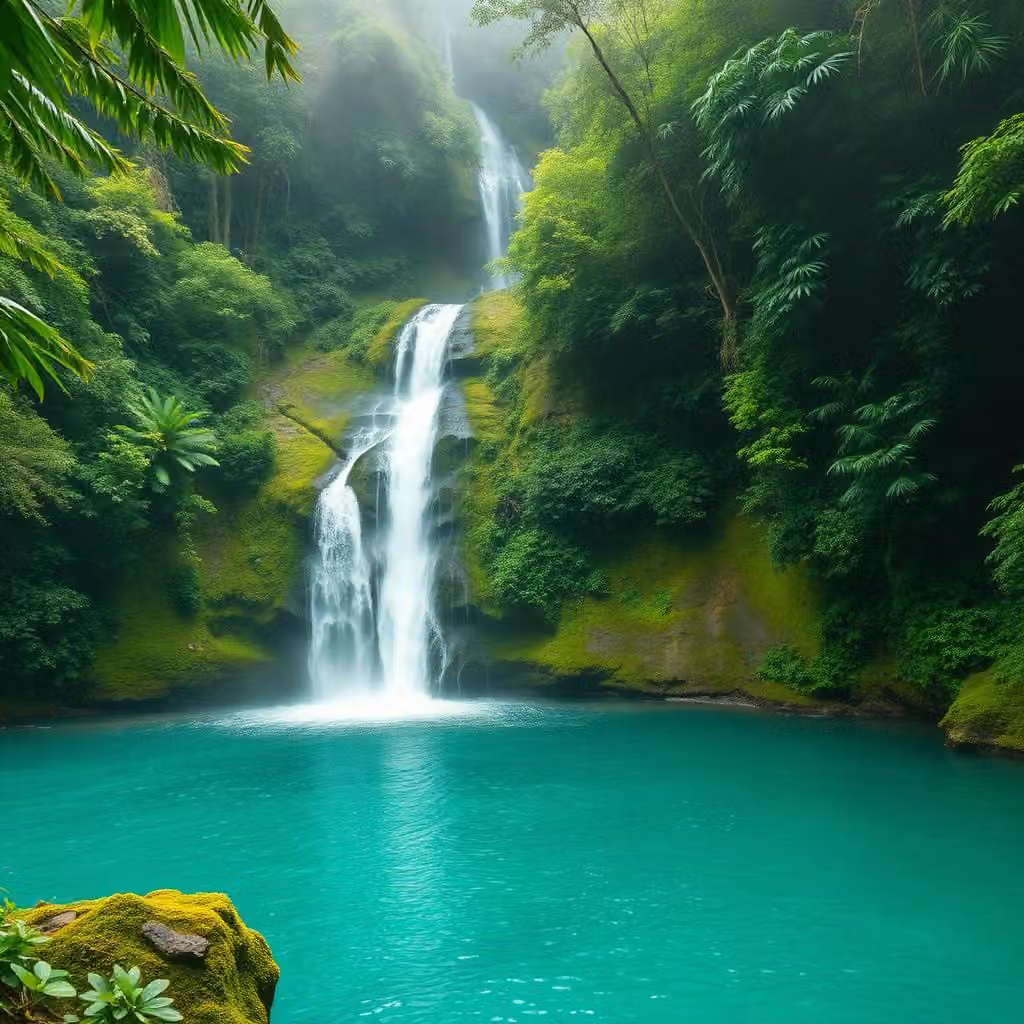
Dominica calls itself the Nature Island, and it earns the name. It is a mountainous, volcanic island covered in rainforest, with rivers, hot springs and waterfalls throughout. At its heart is Morne Trois Pitons National Park, a UNESCO World Heritage Site whose features include Freshwater Lake and the Boiling Lake, one of the largest hot springs of its kind in the world.
Dominica's beauty is mostly inland, so this is a retreat for people who like to walk, swim in rivers and pools and get a little muddy, rather than spend long days on a white-sand beach. Our week is based at Rosalie Bay Resort, an oceanfront eco-resort on the island's east coast.
- Three waterfalls in a day: Emerald Pool, Spanny Falls and Jacko Falls, with time to hike, swim or sit quietly.
- A day with the Kalinago people, Dominica's Indigenous community, meeting elders, cooking local food, learning traditional dances and joining ceremonies.
- Snorkeling and a whale and dolphin watching trip. In 2023 Dominica created what it called the world's first marine protected area for sperm whales, nearly 300 square miles of water off its west coast, where visitors can still watch the whales in limited numbers.
- Trafalgar Falls, Freshwater Lake and natural sulfur springs, finishing with a stop in a Kalinago village and a gentle evening stretch.
- Workshops at Rosalie Bay: herbal tea, a botanical body scrub and cooking on stone, plus a talk on the local turtles and an optional clean-up at the sanctuary.
Best for hikers, nature lovers and groups who want culture as well as scenery. Best months about January to May, which Kuoni describes as the drier stretch. From June to November, rain becomes more regular, especially in August and September.
Getting there Dominica's main airport is Douglas-Charles (DOM). Nonstop flights from Miami on American Airlines and from Newark on United have made the island much easier to reach from the US, though schedules change by season. You can also connect through Caribbean hubs such as Antigua, Barbados or San Juan. US citizens need a passport valid on arrival and no visa for stays of up to six months, per the State Department.
See our Dominica yoga retreat for the full week, or read more about planning a yoga retreat in Dominica.
Panama: a week on the water in Bocas del Toro
Bocas del Toro is an archipelago of forested islands, mangroves and coral reefs on Panama's Caribbean coast, near the border with Costa Rica. Bocas Town, on Isla Colón, is a lively mix of Afro-Caribbean and Latino culture, with restaurants built on stilts over the water.
Our retreat is based at Bluff Beach Retreat on Isla Colón for all six nights. It is the most water-based and the most practice-rich of the three, with a 90-minute vinyasa on the yoga platform and a day with two sessions:
- A private boat to the coral gardens and Playa Estrella, where you can wade among cushion sea stars in the shallows.
- A rainforest hike with a local expert, looking for capuchin monkeys, three-toed sloths and red poison dart frogs, up to a lookout over the northern reefs.
- A boat safari to Dolphin Bay, with more snorkeling and lunch on the water, between a sunrise solar vinyasa and an evening lunar yin session.
- An afternoon in Bocas Town, with artisan shopping and lunch at a stilt-house restaurant, followed by a satsang and a celebratory dinner.
- Free time for e-biking, beach walks, the pool or meditation in a hidden cove.
Best for swimmers, snorkelers, wildlife lovers and groups who want more yoga in their week. Best months February and March, or September, the drier spells on this coast.
Getting there Fly into Panama City's Tocumen airport (PTY), then take a short domestic flight to Bocas del Toro (BOC). According to the Bocas del Toro tourism site, Air Panama flies twice daily from Albrook airport and several times a week direct from Tocumen. Albrook is a separate, smaller airport near the city center, so allow time to cross town if you connect there.
US citizens do not need a visa, but Panama enforces its entry rules strictly. The State Department says you need a passport valid for at least three months beyond your arrival, a return or onward ticket, and proof of at least $500 in cash or the equivalent. Make sure your passport is stamped on arrival.
See our Bocas del Toro yoga retreat, or read more about a yoga retreat in Panama.
Costa Rica: the Pacific alternative in Guanacaste
Tamarindo is a relaxed beach town on Costa Rica's North Pacific coast, in the province of Guanacaste. It is not on the Caribbean at all, but it belongs in this comparison because it is usually the easiest of the three to reach from the US, and its dry season is the most dependable.
Our week is based at Hotel Jardin Del Eden, with practice every day and a strong thread of sound and ceremony:
- A beach horseback ride through jungle trails and along the shore, after a sunrise vinyasa.
- A sunset sound healing ceremony with singing bowls and gongs.
- A private sail with snorkeling in a secluded bay and lunch on deck, sailing on toward sunset, followed by a candlelit yoga nidra session.
- A cacao ceremony led by a local practitioner, then a farewell feast.
- Tamarindo itself, with its pedestrian shopping street, a sunset meditation in the hotel's beach garden and a seafood dinner on the sand.
Best for first-time retreat guests, mixed groups and anyone who wants simple travel and reliable sun. Best months December to April, the dry season. The green season, from May to November, brings quieter beaches and afternoon showers.
Getting there Fly into Liberia (LIR), Guanacaste's international airport, which has nonstop flights from a number of US cities. Tamarindo is about an hour away by road. US citizens need no visa for a tourist stay, but the State Department notes that you need a passport valid for the length of your stay and proof of a return or onward ticket, and that immigration officers decide how many days you are given.
See our Costa Rica yoga retreat, explore our yoga retreats in Costa Rica, or read our Costa Rica retreat guide.

The best time for a Caribbean yoga retreat, season by season
| Season | Dominica | Bocas del Toro | Guanacaste |
|---|---|---|---|
| December to April | Drier from about January, with good hiking weather | December is the wettest month; February and March are the driest | Dry season and high season |
| May to August | Drier through May, then more regular rain; hurricane season from June 1 | Rain rises from April and stays high through the summer | Green season, with sunny mornings and afternoon showers |
| September to November | Peak hurricane months; rain is heaviest in August and September | September has far less rain than October to December | Green season continues; the dry season returns in December |
How to choose your Caribbean yoga retreat
1. Start with your dates. December to April points to Costa Rica's Pacific coast or Dominica. September points to Bocas del Toro. Late summer and fall in Dominica mean hurricane season.
2. Decide what you want between sessions. Hiking, waterfalls and culture mean Dominica. Snorkeling, boats and wildlife mean Bocas del Toro. Beach, ceremony and sound mean Tamarindo.
3. Think about the journey. Liberia is served by nonstop flights from a number of US cities, and the drive to Tamarindo is short. Dominica has nonstop flights from Miami and Newark. Bocas del Toro needs a domestic flight from Panama City.
4. Be realistic about fitness. Dominica's waterfall days involve real hiking on wet trails. Bocas asks you to be comfortable in the water. Costa Rica is the gentlest of the three.
5. Check your paperwork. Panama asks for proof of funds and an onward ticket, and Costa Rica asks for an onward ticket, so keep your return booking handy at the airport.
Hosting your own group in the tropics
For teachers, a tropical retreat is one of the easiest weeks to sell in the US winter, when students are cold and the dry seasons are at their best. A few things are worth planning for.
- Avoid the peak hurricane weeks in Dominica, or build flexible terms into your bookings and supplier contracts.
- Plan for rain. Even in the drier months, a covered practice space and a flexible excursion day are essential.
- Pack for water and trails. Water shoes, quick-dry layers, a light rain jacket, insect repellent and reef-friendly sunscreen. Our yoga retreat packing list covers the rest.
- Check entry rules for every guest, including any who do not hold US passports.
Our retreat planning services handle the venues, boats, guides and transfers in all three countries, and our free guide on how to host a yoga retreat abroad walks you through the rest. As a yoga retreat hosting company, we can also suggest the best windows for your dates.
Find your tropical yoga retreat
Rainforest and waterfalls, reefs and boat days, or sunsets and sound healing: the right week depends on what you want to come home with. Browse all our yoga retreats in Central America, see the full list of our yoga retreat destinations, or contact a retreat planner to find the best fit for your dates.
Essential inquiries

Planning a retreat of your own?
Tell us about your group, your dates and the feeling you want the week to have. We will tell you honestly what it takes, what it costs, and where we would send you — even when the answer is somewhere we do not run.
- A real conversation, not a sales call
- Honest costing before you commit
- Itineraries shaped around your people