
From the Journal
What to Pack for a Yoga Retreat, by Destination
Most packing lists for a yoga retreat say the same things: leggings, a water bottle, sunscreen. Fine, but not much help, because what you actually need depends far more on where you are going than on the fact that there will be yoga.
A week in the Cyclades and a week on safari in Botswana share almost nothing in a suitcase. So this list starts with what every retreat needs, then goes region by region.
Start with the things you cannot buy there
Clothes can be replaced in an afternoon. Documents cannot. Sort these first, and check them twice.
Your passport, and its validity. Rules vary more than people expect. Botswana and Namibia both require six months of validity beyond your arrival date and three blank pages, and Botswana also requires six months beyond your departure. Costa Rica requires your passport to be valid for the length of your stay plus proof of a return or onward ticket. If you are close to renewal, renew first. Check the State Department page for your destination, such as Botswana or Costa Rica.
Visas and printed approvals. Most retreat destinations do not need a visa for US citizens, but some do. Namibia has required one since April 1, 2025, and if you apply online you need to bring the printed approval with you. Print anything you might be asked for at a border rather than relying on your phone.
Travel insurance documents. The policy number and the emergency assistance phone number, saved somewhere you can reach offline. Some countries, including Namibia, may ask to see proof of travel and medical insurance on arrival.
Copies. A photo of your passport photo page, your insurance, and your retreat booking confirmation, stored in your email or a cloud folder. It turns a lost passport from a crisis into an afternoon at the consulate.
Your carry-on
Pack as if your checked bag will not arrive, because on connecting international itineraries, sometimes it does not. A change of clothes, your medications, practice clothes for the first morning, and anything you cannot easily replace should travel with you.
Liquids still follow TSA's 3-1-1 rule on US departures: containers of 3.4 ounces or less, in one quart-size bag per passenger. Screening rules at foreign airports on your return trip can differ, so pack to the strictest rule you will meet.

What the retreat usually provides
Check the retreat's own list before you pack, but most provide:
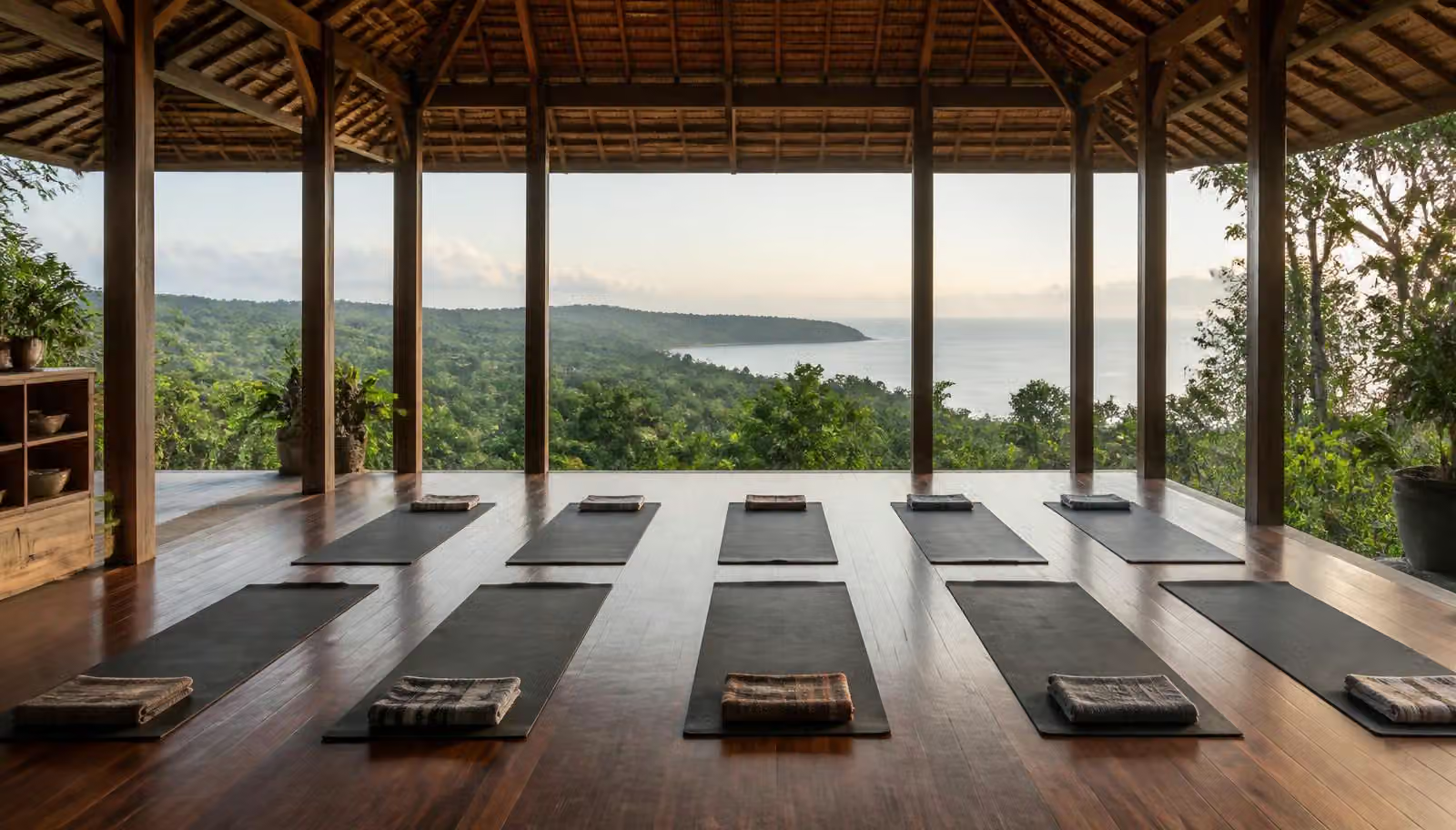
- Mats and props. Blocks, straps, bolsters and mats are standard on almost every retreat. Bring your own mat only if you have a strong preference. A travel mat folds small if you do.
- Towels and basic toiletries. Usually provided at the property. A quick-dry towel is still useful for beach days and waterfalls.
- Drinking water. Most retreats provide filtered water. Bring a refillable bottle and skip the plastic.
Practice clothes
Two or three sets is enough for a week, because you can wash and dry them in most warm climates overnight. Choose fabrics that breathe and dry fast. Bring one warm layer for early morning practice and for savasana, when your body temperature drops faster than you expect, even somewhere hot.
By destination
Southern Europe: Portugal, Spain, Croatia, Greece, Italy
Layers, swimwear, a sun hat, and comfortable walking shoes for cobbled towns. Evenings can be cool on the coast outside high summer, so pack a light sweater. Bring something to cover your shoulders and knees if you plan to visit churches or monasteries, which is common in Greece and Italy.
For the Azores, add a proper rain jacket. The weather changes fast and often several times a day.
Morocco
Modest, loose clothing that covers shoulders and knees, particularly in the medina and in mountain villages. It is more comfortable in the heat anyway, and it makes a noticeable difference to how you are received. A light scarf is useful for sun, dust and visiting religious sites.
If your itinerary reaches the Atlas Mountains, pack a real warm layer. Nights at altitude are cold even when Marrakech is hot.
India and Bhutan
Loose, breathable clothing that covers arms and legs, and shoes you can slip on and off easily, because you will remove them often at temples and homes.
In Bhutan, dzongs and temples expect long sleeves and long pants or skirts, and some ask for a collared shirt. Mornings and evenings are cold at altitude in most months, so bring warm layers. In India, northern winter mornings are chilly, especially on early safari drives.
Safari: Botswana and Namibia
Neutral colors, khaki, olive and tan, for game drives. Avoid bright colors and, in tsetse areas, dark blue and black, which attract the flies. Bring warm layers: early morning drives in an open vehicle are genuinely cold in the dry season, even when afternoons are hot.
Pack in a soft bag. Light aircraft transfers into the Okavango Delta, common on a Botswana safari retreat, usually require soft-sided luggage with a strict weight limit, often around 44 lb (20 kg) including your carry-on. Check the exact limit with your operator before you pack, not at the airstrip.
For Namibia, add a warm hat for desert nights, sunglasses, and closed shoes for dune walks. Sand is hot by mid-morning.

The tropics: Costa Rica, Dominica, Panama
Quick-dry everything, a light rain jacket, and two pairs of shoes: sandals and something with grip for muddy trails and waterfalls. Insect repellent is essential, and reef-safe sunscreen is the considerate choice anywhere you will be swimming over coral.
Costa Rica uses the same plugs as the US, which is one less thing to think about on a Costa Rica retreat. Most other destinations on this list need an adapter.
Sedona, Arizona
Desert layers: hot, bright days and cold nights, sometimes with a big swing in between. A sun hat, high-SPF sunscreen, and real hiking shoes for red rock trails. Bring more water capacity than you think, since the dry air dehydrates you faster than it feels. No passport needed for Sedona, which is its own kind of luxury.
Health and personal
Medications in their original packaging, with a copy of the prescription, and enough to cover a few days of travel delay. Keep them in your carry-on.
Vaccines and malaria advice. Some destinations, including parts of Botswana, Namibia and India, need a travel clinic appointment several weeks before you leave. Check CDC Travelers' Health for your destination and book the appointment early.
A small first-aid kit. Bandages and blister care, rehydration salts, and whatever you usually take for an upset stomach.
What to leave at home
Most of your wardrobe. People consistently overpack for retreats and wear the same three things all week.
Valuables you would be upset to lose. Expensive jewelry has no place on a trail or a beach.
The laptop, if you can. Many retreat properties are somewhere with limited internet by design. You will not miss it as much as you think.
Before you zip the case
Check the specific retreat's packing notes, since every itinerary has its own quirks. Confirm your passport validity and any visa requirement against the current State Department page. Then pack less than you planned.
If you are still deciding where to go, the best time of year for each region will help, and what to expect on your first retreat covers the rest. Browse our destinations, or get in touch with any question about a specific trip.
Essential inquiries

Planning a retreat of your own?
Tell us about your group, your dates and the feeling you want the week to have. We will tell you honestly what it takes, what it costs, and where we would send you — even when the answer is somewhere we do not run.
- A real conversation, not a sales call
- Honest costing before you commit
- Itineraries shaped around your people