
From the Journal
Botswana or Namibia for a Safari Yoga Retreat?
Both are in southern Africa. Both are at their best in the same dry-season months. Both combine wildlife, huge skies and a quiet that most people have never experienced. And they are almost opposites.
Botswana is water. Namibia is desert. Botswana brings the animals close; Namibia gives you space. Choosing between them is less about which is better and more about what you want a week of stillness to feel like.
The short version
Choose Botswana if you want wildlife to be the center of the week, you are drawn to water and green, and you want the intimacy of small fly-in camps where the animals walk past your tent.
Choose Namibia if you want scale and silence, dramatic landscapes that feel like another planet, and some of the darkest night skies on earth, with wildlife as one part of the story rather than all of it.
Getting there from the US
Neither country has many direct flights from the US. Most itineraries connect through Johannesburg, or through a European hub, before a shorter hop onward.
For Botswana, that onward flight usually lands in Maun, the gateway to the Okavango Delta, or Kasane for Chobe. From Maun, reaching the delta camps typically means a light aircraft transfer, which is part of the experience and the reason you will need to pack in a soft-sided bag with a strict weight limit.
For Namibia, you will usually arrive in Windhoek, and from there the distances are enormous. Sossusvlei is several hours by road. Namibia is one of the great road-trip countries, which is wonderful, and it means travel days are real days, not an hour in a van.
Entry rules for US citizens
This is where the two countries differ most right now, and it catches people out.
Botswana does not require a visa for US citizens for stays of up to 90 days. Your passport needs six months of validity beyond your arrival date and six months beyond your departure date, plus three blank pages. Botswana does not accept the 12-page US emergency passport for visa-free entry, so travel on a standard passport book. The details are on the State Department's Botswana page.
Namibia has required a visa for US citizens since April 1, 2025. You can apply in advance through Namibia's online visa portal or get one on arrival at Hosea Kutako International Airport in Windhoek and at Walvis Bay. The fee for non-African Union citizens is N$1,600, so check the current exchange rate. If you apply online, bring the printed approval. Your passport needs six months of validity beyond your arrival and three blank pages, and you may be asked for your accommodation confirmation, itinerary, proof of funds and proof of travel and medical insurance. See the State Department's Namibia page for the full list.
If your trip combines both countries, count your pages. Three blank pages for each adds up quickly on a well-used passport.
Advisories. Both countries currently carry a State Department Level 2, "Exercise Increased Caution," advisory. Botswana's, issued June 17, 2026, cites crime. Namibia's, issued May 15, 2026, cites crime and health concerns. Level 2 covers a great many popular destinations, and on a hosted safari with vetted transfers and remote camps, the practical risk profile is very different from independent city travel. Still, read the advisory and share it with your group in advance.
Health. Parts of both countries, including the Okavango Delta and northern Namibia, carry malaria risk, while much of central and southern Namibia is lower risk. Book a travel clinic appointment several weeks before you leave and check CDC Travelers' Health for current vaccine and malaria guidance.
What each one costs
Botswana is deliberately expensive. The country has long followed a high-value, low-volume approach to tourism: fewer visitors, smaller camps, higher prices, and much less crowding at wildlife sightings as a result. Fly-in camps in the Okavango sit at the top end of safari pricing anywhere in Africa.
Namibia is generally more affordable per night, with a wider range of lodges and guesthouses. The cost that rises instead is time: long transfer days, fuel, and the vehicles needed to cover the distances.
For a retreat leader, the difference shapes the whole budget. Botswana concentrates cost in accommodation and flights. Namibia spreads it across ground transport. The cost structure of a retreat explains why that difference matters for your break-even.

What each place does to a group
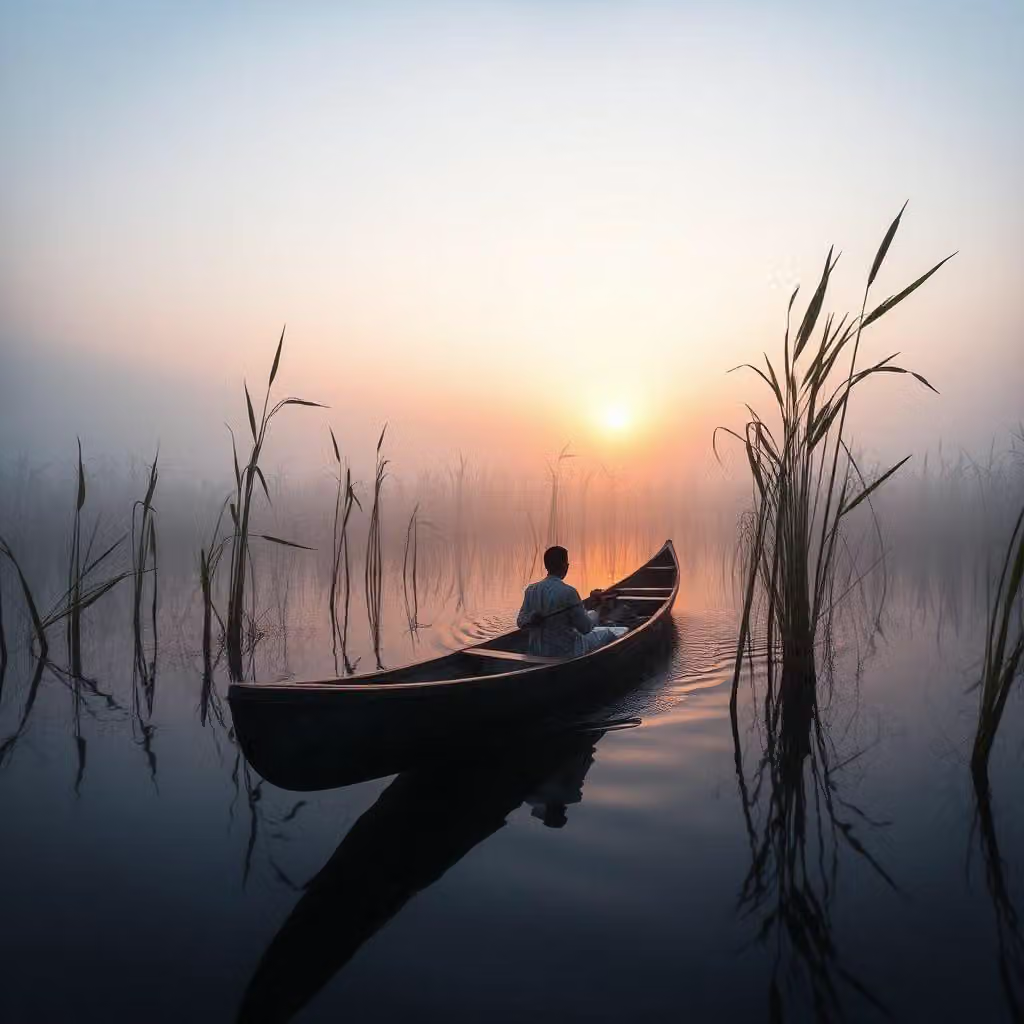
Botswana is about stillness on water. Gliding through papyrus channels in a mokoro, a traditional dugout canoe, is one of the quietest experiences available anywhere. Elephants come to drink at the edge of camp. Early morning game drives start in the cold dark and end in the kind of light that makes everyone stop talking.
It is also a place where your group lives by the rhythm of the bush. Camps are often unfenced, so guests are escorted after dark, and the day is shaped around drives at dawn and dusk when animals are most active. Practice tends to happen midday on a shaded deck, or at dawn before the first drive. A Botswana soul safari is built around exactly that rhythm.
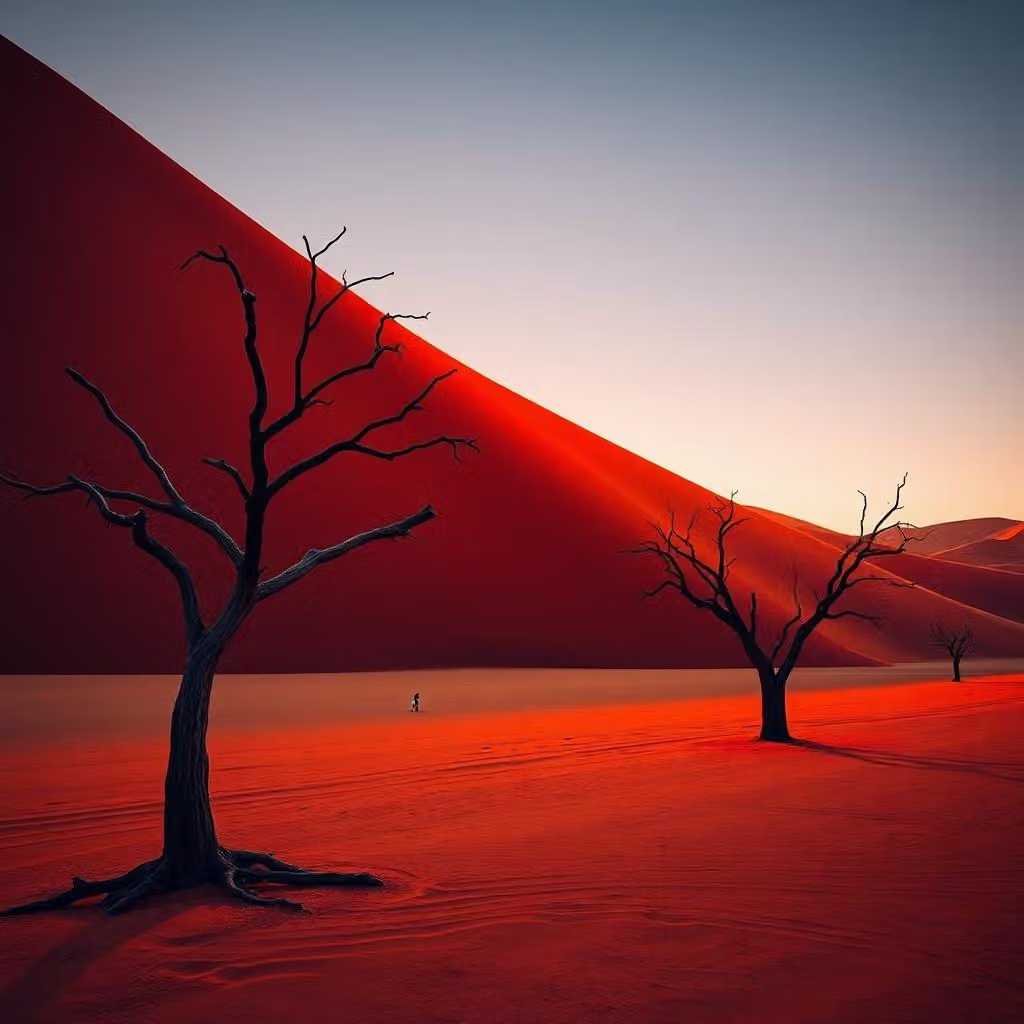
Namibia is about scale and silence. Climbing the red dunes of Sossusvlei at sunrise, walking the white clay floor of Deadvlei among dead camel-thorn trees, standing in desert so quiet you can hear your own pulse. The emotional arc of a Namibian week comes from space rather than proximity.
And then there are the nights. The NamibRand Nature Reserve, near Sossusvlei, is an International Dark Sky Reserve, and on a clear, moonless night the Milky Way runs from one horizon to the other. For a retreat built around meditation and reflection, few settings compare. Namibia Wild Soul leans into both the dunes and the dark.
When to go
The dry season, roughly May to October, is the season for both. Wildlife concentrates around shrinking water sources, and game viewing improves through the months, peaking around July to October.
Botswana has an extra layer. The Okavango's floodwaters arrive months after the rains that feed them, so the delta is typically at its fullest around June to August, which is the best window for water-based activities like mokoro trips.
Namibia's desert is most comfortable in the cooler months, when dune walks at dawn are pleasant rather than punishing. Nights in June and July are genuinely cold. For the full picture across every region, see the best time of year for a wellness retreat.
Packing is different for both
Neutral colors for game drives, serious warm layers for cold mornings, sun protection, and a soft-sided bag, especially for Botswana's light aircraft. Our packing guide by destination covers the details.
The honest recommendation
Choose Botswana if this is a once-in-a-lifetime trip where wildlife is the priority, your group is comfortable with a higher price point, and you want the most intimate safari experience available.
Choose Namibia if your theme is space, reflection or reset rather than wildlife alone, your group enjoys a journey with real travel days, and you want more room in the budget.
Choose both if you have ten days or more. The contrast between the delta and the desert is extraordinary, and many of the most memorable southern Africa itineraries combine them. Just count your passport pages.
See our Africa destinations, including Botswana and Namibia, or tell us about your group and we will tell you honestly which fits. If you would like to talk it through first, get in touch.
Essential inquiries

Planning a retreat of your own?
Tell us about your group, your dates and the feeling you want the week to have. We will tell you honestly what it takes, what it costs, and where we would send you — even when the answer is somewhere we do not run.
- A real conversation, not a sales call
- Honest costing before you commit
- Itineraries shaped around your people