
From the Journal
Sedona Yoga Retreats: What to Know Before You Go
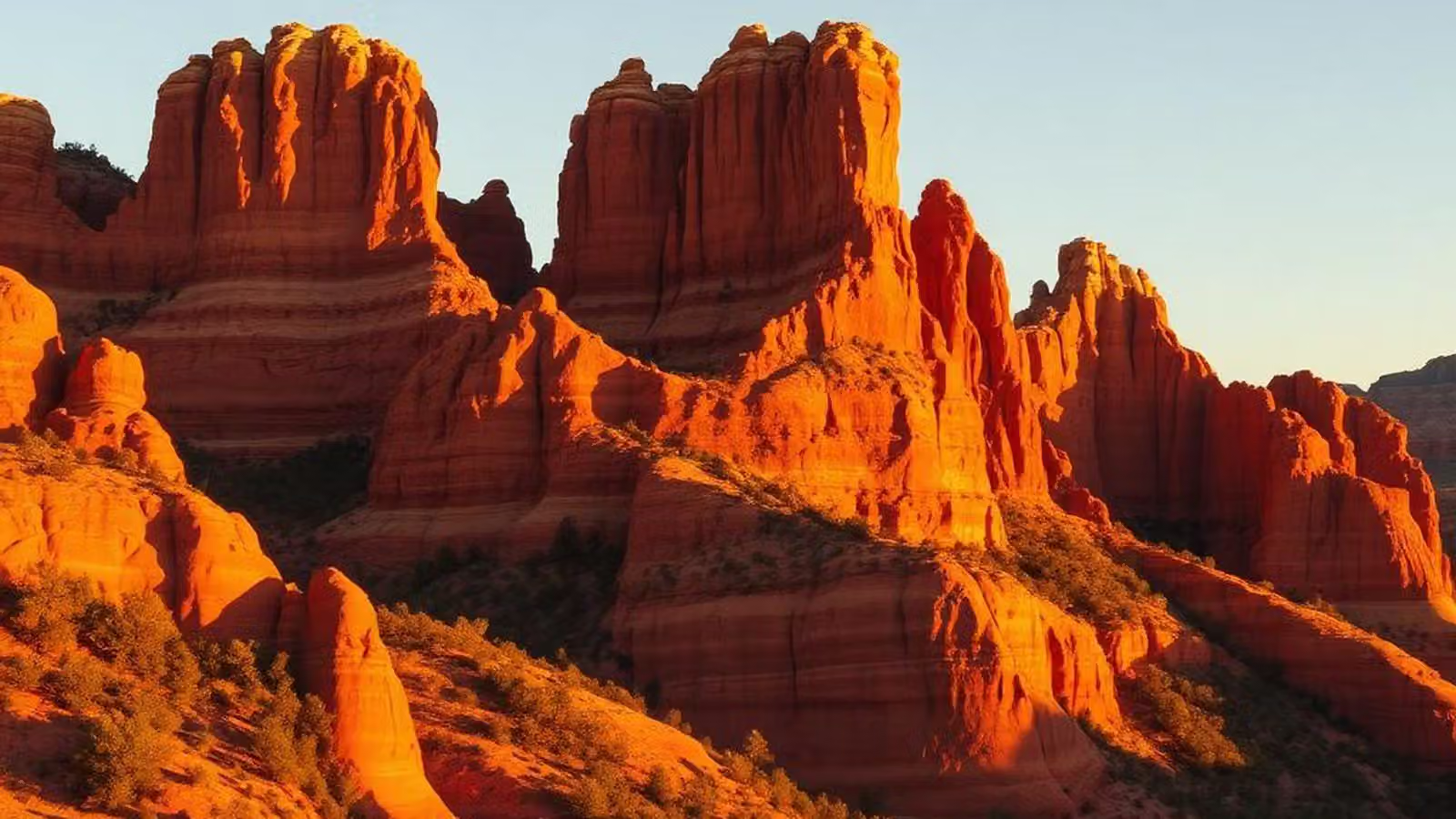
Sedona is the one retreat destination on our list that needs no passport, no currency exchange and no long-haul flight for American guests. It is also one of the most striking landscapes in the country: red rock spires, deep canyons, and a quality of light at dawn and dusk that stops conversations.
It has a particular reputation too, as a center for spiritual and wellness travel built around the idea of energy vortexes. Here is what to know about the place, the vortexes and the practicalities before you plan a week there.
Why Sedona works for a US group
No passport. For a group where some guests have an expired passport, or have never had one, this removes the single biggest barrier to saying yes. It is also why Sedona suits a retreat planned on a shorter timeline.
Short travel days. A flight to Phoenix is a few hours from most of the country, with no connection overseas and no jet lag beyond a time zone or two.
A landscape that does the work. Few places in the US feel as far from ordinary life as the red rocks at sunrise. The setting carries a retreat in the way a Greek island or a Himalayan valley does.
One thing to check for every guest: domestic flights now need the right ID. Since May 7, 2025, TSA has required a REAL ID-compliant license or another accepted ID, such as a passport, to fly within the US. Since February 1, 2026, travelers without one can pay a $45 fee for TSA's ConfirmID identity check, which adds screening time. Mention it in your pre-departure email.
The vortexes, honestly
Sedona's fame as a wellness destination rests largely on its vortexes. Visit Sedona, the area's tourism office, describes them as swirling centers of the earth's energy that are conducive to healing, meditation and self-discovery, and names four main sites: Airport Mesa, Cathedral Rock, Bell Rock and Boynton Canyon.
There is no scientific basis for the idea, and Visit Sedona frames it as something experienced rather than measured. It also makes the fair point that these are among the most beautiful places in the area, and that fresh air, open views and sunshine make people feel better on their own.
For a retreat, that is really the whole case. Whether your guests arrive as believers, skeptics or somewhere in between, sitting quietly on a slab of red rock above a valley at sunrise is a powerful place to practice. A good retreat treats the vortexes with respect and curiosity rather than asking anyone to sign up to a belief.
Our Vortex Flow Sedona retreat is built around visits to these sites, timed for early mornings when the light is best and the trails are quietest.
When to go
Spring, March to May, and autumn, September to November, are the best seasons. Days are warm, nights are cool, and the red rock glows in the low light.
Summer is hot, though Sedona's altitude of about 4,350 feet keeps it milder than Phoenix. July and August bring the southwestern monsoon, with dramatic afternoon thunderstorms. They are beautiful to watch, and they can cause sudden flash flooding in washes and canyons, so plan hikes for the morning and stay out of drainages when storms build.
Winter is cold, and snow on the red rocks is spectacular when it comes, though it can limit hiking. For how Sedona compares with every other region, see the best time of year for a wellness retreat.
Getting there
Most guests fly into Phoenix Sky Harbor (PHX), which has the widest choice of flights, and then drive about two hours north. Flagstaff (FLG) is closer, at roughly 45 minutes, but has far fewer flights. Sedona's own airport does not have scheduled passenger service.
The drive up from Phoenix is part of the arrival, climbing out of the desert into the red rock country. A group transfer from PHX is the simplest arrangement, and it means guests meet each other before they reach the property.

Trail passes and the shuttle
Two practical details trip up visitors.
Parking passes. Many trailheads and recreation sites around Sedona sit in Coconino National Forest and require a pass to park. The Red Rock Pass and the Coconino Hospitality Annual Pass cover fees at many sites, and the federal America the Beautiful pass is also accepted. The Forest Service passes page has current details. On a hosted retreat this is usually handled for you, but it is worth confirming.
The free shuttle. The City of Sedona runs the free Sedona Shuttle to several of the busiest trailheads, including Cathedral Rock and Soldier Pass, where parking fills early. Schedules vary by season and expand around holidays, so check the current timetable before relying on it.
The night sky
Sedona is an International Dark Sky Community, designated on August 4, 2014, the eighth in the world. The city limits light pollution to protect its night sky, and on a clear, moonless night the stars are extraordinary for somewhere so easy to reach.
An evening meditation or a stargazing session under that sky is one of the quieter highlights of a Sedona retreat, and it costs nothing.
What a Sedona retreat feels like
Mornings start early, often with practice or a short hike timed for sunrise on the red rock. The middle of the day, when the sun is strongest, is for rest, a pool, a massage or time alone. Late afternoons bring a second practice or a walk into a canyon as the light turns gold, then a long dinner outdoors.
Beyond the vortex sites, there is Oak Creek Canyon for cool water and shade in warmer months, easy walks among juniper and cypress, and a town with plenty of galleries and cafes for free afternoons.

Practical notes
Water and sun. The air is dry and the altitude is real. Carry more water than you think you need on every hike, and wear a hat and high-SPF sunscreen even when it does not feel hot.
Footwear. Red rock is grippy but uneven. Proper hiking shoes are worth packing, and our packing guide by destination covers the desert layers you need for hot days and cold nights.
Pace. The first day or two at altitude can feel harder than expected, especially for guests coming from sea level. A well-designed retreat starts gently.
Is Sedona right for your group?
Sedona suits a US group that wants a dramatic landscape without international travel, a first retreat where some guests do not have passports, a retreat planned on a shorter timeline, and groups drawn to spiritual or contemplative themes.
Look elsewhere if your group wants the sea, or the sense of being somewhere culturally unfamiliar. For another short-hop option with a very different feel, see planning a yoga retreat in Costa Rica.
If you are going on your own, going on a yoga retreat alone covers what to expect. If you are planning for a group, the 12-month planning timeline sets out the sequence. Explore our USA page, tell us about your group, or get in touch.
Essential inquiries

Planning a retreat of your own?
Tell us about your group, your dates and the feeling you want the week to have. We will tell you honestly what it takes, what it costs, and where we would send you — even when the answer is somewhere we do not run.
- A real conversation, not a sales call
- Honest costing before you commit
- Itineraries shaped around your people