
From the Journal
Planning a Yoga Retreat in Costa Rica: A US Traveler's Guide
For Americans, Costa Rica is the obvious first retreat destination, and for good reasons. It is a short flight from much of the country. There is little or no jet lag. US citizens do not need a visa. And within a few hours of landing you can be practicing on a deck above the Pacific with howler monkeys in the trees.
Obvious does not mean simple, though. Costa Rica is small on a map and slow to cross, its seasons differ sharply between coasts, and the choice of airport can add or remove half a day of travel. Here is how to plan it well.
Why it works so well for a US group
Short flights. Many major US hubs have direct flights to Costa Rica, and from the southern US and the East Coast the trip is a few hours, not a day.
Almost no jet lag. Costa Rica keeps the same clock all year, matching US Central Standard Time, because it does not observe daylight saving. Depending on the season and where you fly from, that is zero to two hours of difference. Guests arrive ready to practice rather than sleep.
Easy logistics. US dollars are widely accepted alongside the Costa Rican colón, cards are common in tourist areas, and the country uses the same electrical plugs as the US.
For a first retreat, especially one filled mostly with American guests, that combination removes a lot of the friction that makes international travel hard to sell.
Which coast
Costa Rica's regions feel like different countries, and the one you pick shapes the whole week.
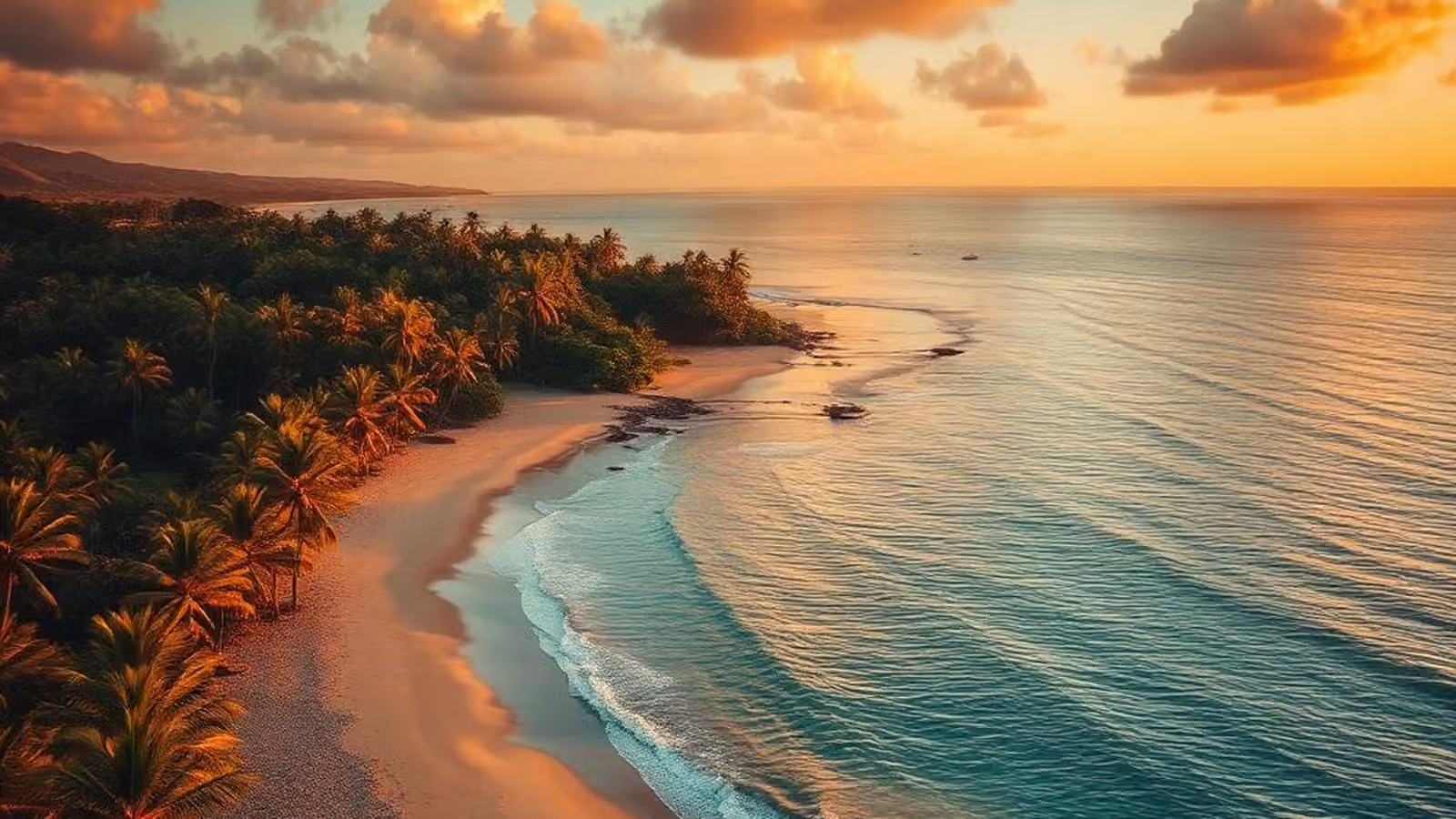
The Pacific coast, including Guanacaste and the Nicoya Peninsula, is the classic retreat setting: long beaches, surf, dramatic sunsets and a pronounced dry season. The Nicoya Peninsula is also one of the world's Blue Zones, the handful of regions known for unusually long, healthy lives, which gives a wellness retreat there an easy story. Salt and Sound sits on this side.
The Caribbean coast, around Puerto Viejo, is wetter, greener and more laid back, with Afro-Caribbean food and culture and a rhythm of its own. Its weather follows a different pattern from the Pacific.
The interior, including the cloud forests of Monteverde and the Arenal volcano area, offers cooler air, hot springs and hiking. Many itineraries combine a few mountain days with a stretch on the coast.

Which airport
Costa Rica has two main international airports, and choosing the right one saves real time.
Liberia (LIR), Daniel Oduber Quirós International Airport in Guanacaste, is the gateway to the northern Pacific beaches and much of the Nicoya Peninsula. For a Pacific-coast retreat it often means a transfer of an hour or two rather than a long drive across the country.
San José (SJO), Juan Santamaría International Airport, near the capital, is better for the Central Valley, the Caribbean side, and some southern Pacific areas.
Whichever you choose, budget for the roads. Mountain routes, rain and single-lane bridges mean a short distance on a map can take much longer than expected. Arranged group transfers from the airport are the norm on retreats, and they are worth it.
When to go
On the Pacific side, the dry season runs roughly December to April. Skies are reliably clear, the landscape turns golden, and it is peak season, with prices and crowds to match.
The green season, May to November, brings lush landscapes, fewer visitors and lower prices. Rain often arrives in the afternoon rather than all day, which suits a retreat schedule with practice in the morning. September and October are the wettest months on the Pacific coast and the ones to approach with care.
Early December and the first weeks of the green season can be the sweet spot. For how Costa Rica compares with the rest of Central America and every other region we work in, see the best time of year for a wellness retreat.
Entry requirements for US citizens
According to the State Department's Costa Rica page, US citizens do not need a visa for tourism. Authorities may allow a stay of up to 180 days, though that is not guaranteed. Your passport must be valid for the full length of your stay, and you must be able to show a return or onward ticket.
That onward ticket requirement is the one that occasionally trips people up, especially guests who plan to travel on after the retreat. Make sure everyone has proof of a flight out.
Safety, honestly
Costa Rica currently carries a State Department Level 2, "Exercise Increased Caution," advisory, issued April 2, 2026, citing crime. The advisory notes that petty crime is common and that violent crime affects tourists as well.
On a hosted retreat with arranged transfers and a vetted property, the practical risks look very different from independent travel, but a few habits matter. Never leave belongings visible in a parked car, which is the most common way visitors lose things. Keep valuables in the room safe. Use the retreat's arranged transport rather than unofficial taxis.
The risk people underestimate is the ocean. Many Pacific beaches have strong rip currents and few lifeguards. Swim where locals swim, ask your hosts about conditions, and never swim alone at an unfamiliar beach.
It is also worth enrolling in the free Smart Traveler Enrollment Program, so the US embassy can reach you in an emergency, and checking CDC Travelers' Health for vaccine advice before you go.

What a Costa Rica retreat looks like
The best Costa Rica retreats use the landscape rather than just sitting in it. Mornings on a practice deck in the trees. Afternoons surfing, horseback riding along the beach, or visiting a waterfall. Sound healing or restorative practice as the light goes. Long dinners with fresh fish, tropical fruit and gallo pinto.
The wildlife is part of the experience in a way it is almost nowhere else: monkeys, sloths, toucans, and in season, sea turtles nesting on Pacific beaches. It is worth building in a guided nature walk for the group, since a good guide spots ten animals for every one you would find alone.
See the full day-by-day itinerary on Salt and Sound, or our Costa Rica page for the wider picture.
What the price should include
When comparing Costa Rica retreats, check line by line: airport transfers from LIR or SJO, all meals, all scheduled practice, named excursions, national park and reserve entry fees, and guides. Surf lessons, spa treatments and alcohol are commonly extra.
Tipping is customary for guides and drivers. Restaurant bills often already include a service charge, so check before adding more.
Packing for Costa Rica
Quick-dry clothing, a light rain jacket even in the dry season, sandals plus shoes with grip for muddy trails, insect repellent, and reef-safe sunscreen. No adapter needed. Our packing guide by destination has the full list.
If Costa Rica is not quite right
Costa Rica is the best-known retreat destination in Central America, not the only one.
Dominica is wilder and far less visited, with rainforest, hot springs and waterfalls, and Panama combines cloud forest with the Caribbean islands of Bocas del Toro. Both are covered on our Central America page.
If you are traveling on your own, going on a retreat alone covers how rooms and the first evening work. If you are planning for a group, tell us about it, or get in touch with any question.
Essential inquiries

Planning a retreat of your own?
Tell us about your group, your dates and the feeling you want the week to have. We will tell you honestly what it takes, what it costs, and where we would send you — even when the answer is somewhere we do not run.
- A real conversation, not a sales call
- Honest costing before you commit
- Itineraries shaped around your people