
From the Journal
Planning a Yoga Retreat in Bhutan: Fees, Visas and Timing
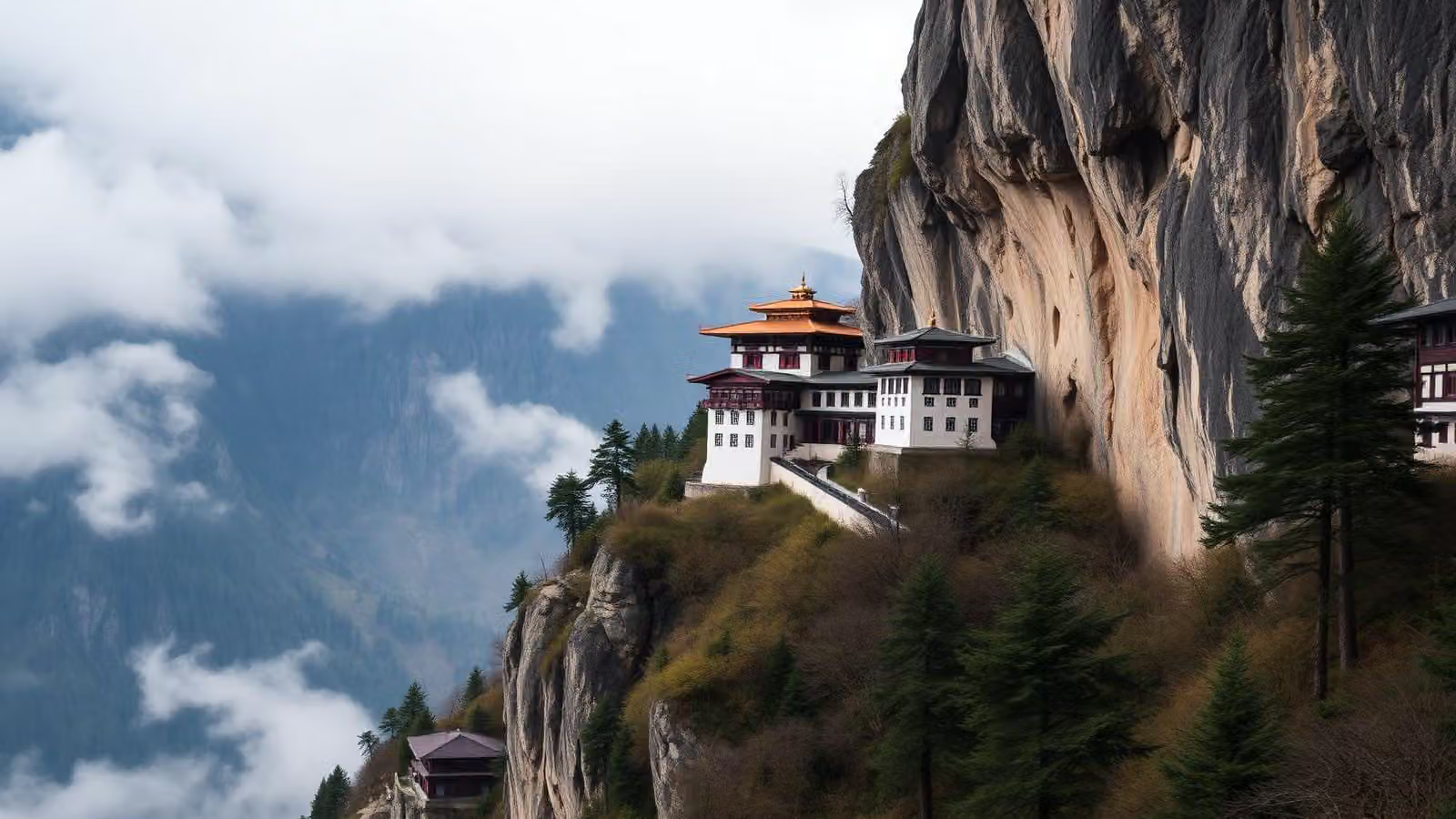
Bhutan is unlike almost anywhere else you can take a group. A Himalayan kingdom that measures its progress by Gross National Happiness, that deliberately limits tourism to protect its culture and landscape, and where monasteries cling to cliffs above valleys of prayer flags.
It is also a destination with more rules than most, and a daily fee that surprises people who have not planned for it. None of it is difficult. It just needs to be understood before you commit. Here is what a Bhutan retreat actually involves for US travelers.
Why Bhutan works for a retreat
Most retreat destinations offer a beautiful setting. Bhutan offers a culture where contemplation is part of ordinary life. Monks, temples, butter lamps and prayer wheels are not attractions staged for visitors. They are simply how the country lives.
That makes the practice land differently. Meditating in a valley where people have meditated for centuries, or walking up to a cliffside monastery at your own pace, gives a week an emotional depth that is hard to build anywhere else. And because visitor numbers are deliberately kept low, it rarely feels crowded.
The Sustainable Development Fee
This is the first thing to understand, because it shapes the budget.
Every visitor to Bhutan pays a Sustainable Development Fee for each night in the country. According to the State Department, the current fee is $100 per person, per night. Children aged 6 to 12 pay $50 per night, and children under 6 are exempt.
Bhutan says the fee supports free healthcare and education, conservation and infrastructure, and it is central to the country's long-standing approach of high-value, low-volume tourism. It was reduced from $200 per night in 2023, and that reduced rate is scheduled to run through 2027. Because it is a temporary reduction, confirm the rate before you publish a price.
For planning, the arithmetic is simple and worth doing early. A seven-night retreat carries $700 per adult in fees alone, on top of accommodation, food, guiding and flights. Build it into the price as its own line rather than folding it in quietly, and explain it on the booking page. Guests accept it far more readily when they understand what it pays for.
Visas and entry for US citizens
US citizens need a visa for Bhutan, and it must be arranged before you travel.
You apply online through the Bhutanese Department of Immigration, and the visa fee is $40. In practice, most retreat guests have this handled as part of their booking, because the visa is closely tied to the itinerary, the guide and the fee.
Your passport must have at least six months of validity beyond your arrival date, with a blank page for each stamp. As always, ask guests to check this early. A passport that expires within the window is the most common reason a Bhutan trip goes wrong.
The guide rule
Visitors must be accompanied by a licensed guide, and you cannot rent a car and drive yourself. Transport is arranged with a driver through a hotel or a licensed tour company.
For a retreat, this is less a restriction than a benefit. A good Bhutanese guide is the difference between seeing a temple and understanding it. They explain the rituals, handle the permits, know which festival is happening where, and quietly make the whole week run. Choose a retreat where the guide is part of the design, not an afterthought.

Safety
Bhutan currently carries a State Department Level 1 advisory, "Exercise normal precautions," issued September 4, 2026. That is the lowest level, and Bhutan is one of the calmest, safest places you can travel.
The real considerations are physical rather than security-related: altitude, mountain roads, and the effort of the hike to Tiger's Nest. Enroll in the free Smart Traveler Enrollment Program anyway, so the embassy can reach you, and see a travel clinic before you go.
Getting there
There are no direct flights from the US. Bhutan's only international airport is at Paro, served by the national carrier Drukair and by Bhutan Airlines, with connections through regional hubs such as Delhi, Kathmandu and Bangkok.
The approach into Paro, threading between mountains to a runway in a narrow valley, is one of the most dramatic landings in the world. If you fly in from Kathmandu or Delhi, a window seat on the left gives you a chance of seeing the high Himalaya on a clear day.
Because the journey is long, many itineraries combine Bhutan with a stop elsewhere in the region. Our Golden Triangle with Ranthambore retreat in India is one natural pairing, and both sit on our Asia page.
When to go
Bhutan has two clear windows.
Spring, March to May, brings rhododendrons in bloom across the hillsides and warmer valley days. Autumn, September to November, brings the clearest mountain views of the year and many of the major tsechu festivals, when monasteries fill with masked dances and families in their finest clothes.
The monsoon, June to August, brings heavy cloud that often hides exactly the views you came for. Winter is cold, but bright and very quiet at lower altitudes, which some groups prefer. For how Bhutan compares with every other region, see the best time of year for a wellness retreat.
What a Bhutan retreat feels like
The rhythm is slower than most trips, and deliberately so. Mornings of practice, often in view of the mountains. Visits to dzongs, the great fortress monasteries that combine religious and government life. Evenings of simple, warming food, where red rice, chilies and cheese appear in almost everything.
The emotional center of most itineraries is the walk to Paro Taktsang, the Tiger's Nest monastery, built into a cliff roughly 3,000 feet above the valley floor. It is a steady climb of several hours rather than a technical hike, and there is a teahouse partway up with a view that makes the effort feel small. Our Discover Bhutan retreat builds the week toward it.
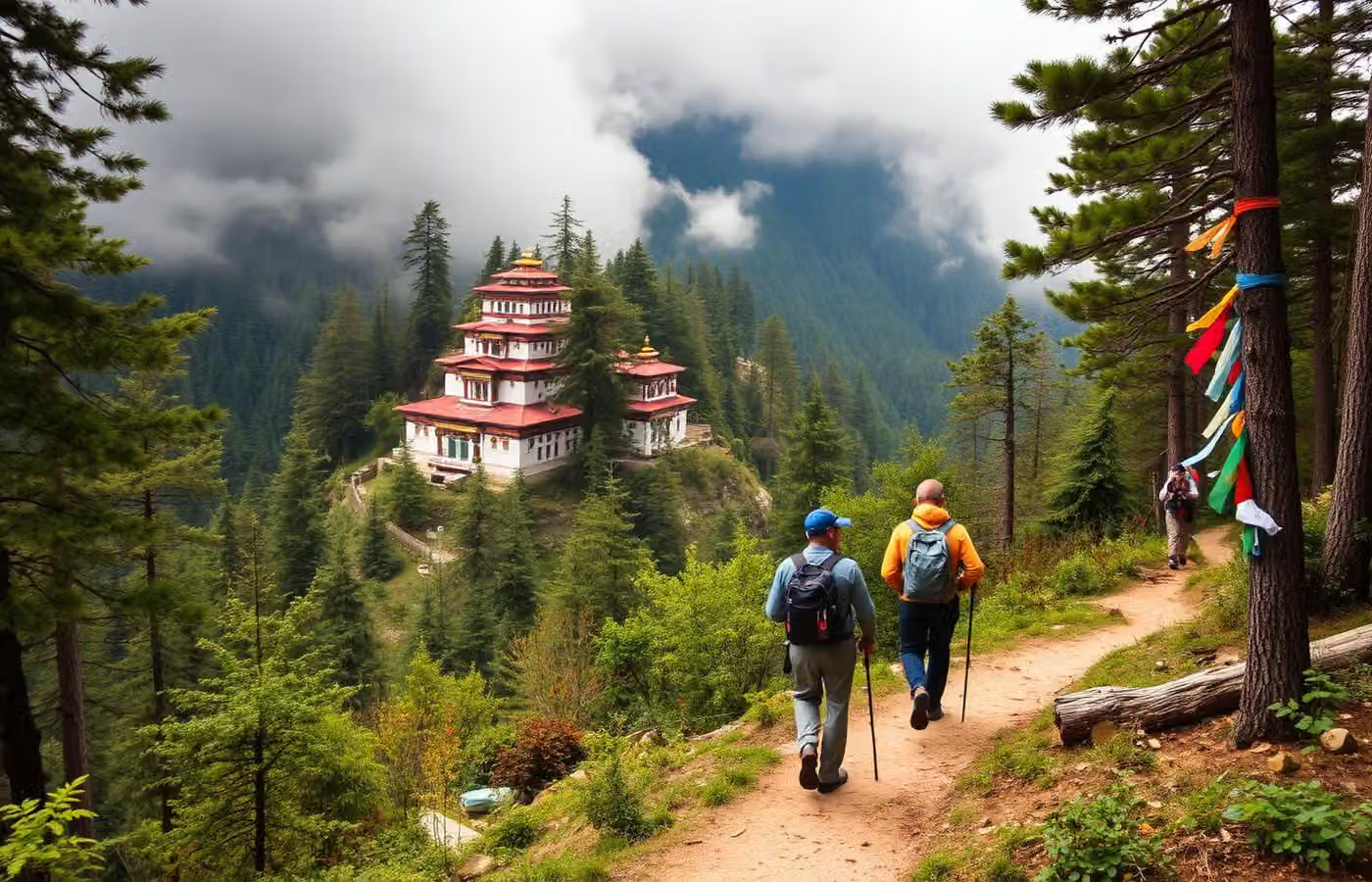
Altitude is worth respecting. Paro and Thimphu sit at roughly 7,000 to 8,000 feet, and Tiger's Nest higher still. The first day or two should be gentle, with plenty of water. A well-designed retreat builds in that adjustment rather than rushing to the big hike.
Customs worth knowing
Dress modestly, and more formally for dzongs and temples, where long sleeves and long pants or skirts are expected and some sites ask for a collared shirt. Remove shoes and hats where asked, walk clockwise around temples and prayer wheels, and ask before photographing people or the interiors of religious buildings, where photography is often not allowed.
Our packing guide by destination covers what to bring, including the warm layers you will want for cold mornings and evenings at altitude.
Is Bhutan right for your group?
Bhutan suits groups who want a genuinely contemplative week, who are curious about Buddhist culture, and who are comfortable with a higher price and a longer journey in exchange for something they could not easily arrange themselves.
It is less suited to a first retreat for a budget-conscious group, or to guests with serious mobility or altitude concerns. For a gentler first trip, the best time of year guide and our full list of destinations are good places to compare.
Explore our Bhutan page, tell us about your group, or get in touch with any question about the fee, the visa or the timing.
Essential inquiries

Planning a retreat of your own?
Tell us about your group, your dates and the feeling you want the week to have. We will tell you honestly what it takes, what it costs, and where we would send you — even when the answer is somewhere we do not run.
- A real conversation, not a sales call
- Honest costing before you commit
- Itineraries shaped around your people