
From the Journal
Which Yoga Retreat in Spain? Four Coasts Compared
"A retreat in Spain" can mean four very different weeks. A quiet island of coves and footpaths. A volcanic island in the Atlantic with spring weather in January. A wild Catalan coastline an hour from Barcelona. A sunny stretch of the Costa Blanca with mountains at its back.
We run retreats in all four. They share good food, warm light and easy travel from the US, and almost nothing else. Here is how to choose.
The short version
Menorca for a quiet, walkable island with clear water and a slow pace. Tenerife for dramatic volcanic landscapes and reliable warmth almost year-round. The Costa Brava for wild coves, Catalan food and the easiest travel from the US. Benidorm and the Costa Blanca for mild weather, a relaxed Mediterranean rhythm and good value.
Entry rules, the same for all four
All four sit in Spain, including the Canary and Balearic Islands, so the rules are the same wherever you go.
US citizens do not need a visa for stays of under 90 days within the Schengen area's 180-day window. Your passport must be valid for at least three months beyond your departure date, with a blank page for entry and exit stamps. Details are on the State Department's Spain page, which currently lists a Level 2 "Exercise Increased Caution" advisory, issued August 1, 2026, citing terrorism and unrest. Level 2 covers many of Europe's most visited countries.
Two EU border changes are worth knowing. The Entry/Exit System has been fully operational since April 10, 2026, and records a facial image and, for travelers aged 12 and over, fingerprints at your first entry, so allow extra time at arrivals. ETIAS, the planned online travel authorization, is not yet required. The EU has dropped its earlier target of late 2026 and says it will announce a start date several months before launch, so check before each season.
Menorca: the quiet island
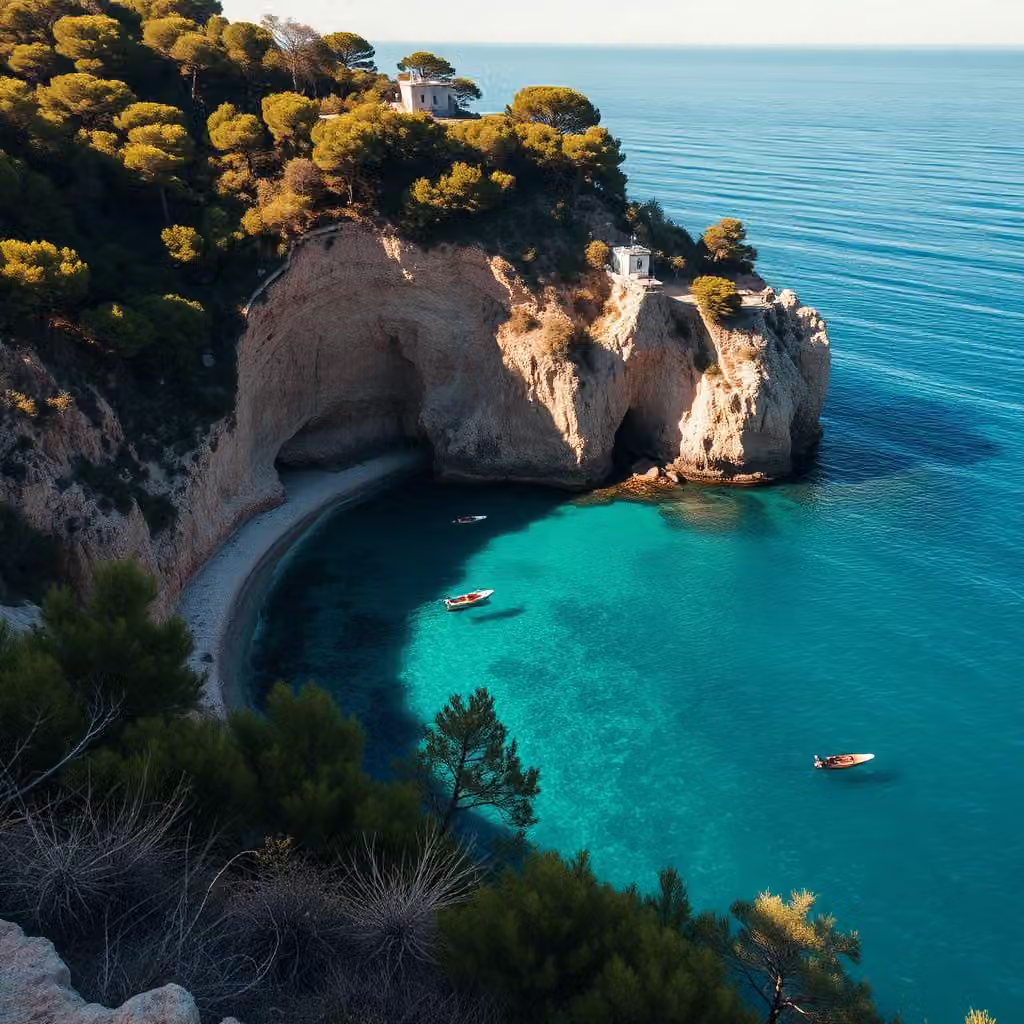
Menorca is the calmest of the Balearic Islands, far quieter than Mallorca or Ibiza, and the whole island is a UNESCO Biosphere Reserve. Low-rise villages, pine-backed coves with water so clear it looks shallow when it is not, and a rural interior of stone walls and farms.
It is also made for walking. The Camí de Cavalls, an old bridle path, circles the entire island for about 185 kilometers, roughly 115 miles, in 20 stages of between 5 and 13 kilometers. That makes it easy to build gentle coastal walks into a retreat week, one stage at a time.
Best for groups who want stillness, swimming and walking, and a slower pace. Best season May to June and September to October. July and August are hot and busier.
Getting there Menorca's airport (MAH) is a short flight from Barcelona or Madrid, both of which have direct flights from several US cities.
Our Menorca: Rugged Coasts & Crystal Waters retreat spends its week among the south-coast coves, with a visit to a local farm to try the island's famous cheese.

Tenerife: volcanic and warm all year
Tenerife is the largest of the Canary Islands, out in the Atlantic off the coast of northwest Africa, and it feels nothing like mainland Spain. Black-sand beaches, lava fields, pine forests, and the vast cone of Mount Teide, Spain's highest peak at 3,715 meters, or 12,188 feet, at the center of a national park that is a UNESCO World Heritage Site.
Its great advantage is climate. The Canaries are subtropical and mild more or less year-round, which makes Tenerife the one Spanish retreat worth planning for midwinter, when the Mediterranean coast is cool and quiet.
Best for groups who want dramatic landscapes, winter sun, or a retreat outside the usual European season. Best season almost any time of year, including November to March.
Getting there Tenerife has two airports, Tenerife South (TFS) and Tenerife North (TFN). Most US travelers connect through Madrid, a flight of roughly two and a half to three hours. Note that the Canary Islands run one hour behind mainland Spain.
See Tenerife: Volcanic Balance for a beachfront week built around the island's volcanic landscapes.

The Costa Brava: wild coves and Catalan food
The Costa Brava, or "rugged coast," runs north from Barcelona toward the French border. Pine-covered cliffs drop into small coves, medieval stone villages sit on hilltops, and the food is some of the best in Spain, rooted in Catalan traditions of seafood, rice dishes and local wine.
It is the easiest of the four to reach from the US, since Barcelona has direct flights from several American cities, and the coast is a short drive from the airport. That makes it a strong choice for a group coming mostly from the US who want Europe without a connecting flight.
Best for groups who want a mix of nature, culture and food, and the simplest travel from the US. Best season May to June and September to October.
Getting there Fly into Barcelona (BCN), or Girona (GRO), which is closer to the coast but has fewer flights.
Our Costa Brava: Soul & Sea retreat is built around the wild coves and Catalan culture of the coast.
Benidorm and the Costa Blanca: mild and easy
Benidorm is best known for its skyline and its beaches. The coast and hills around it are a different world: quiet coves, whitewashed villages such as Altea, and mountain villages like Guadalest a short drive inland. The Costa Blanca also has some of the mildest winters on mainland Spain.
It is the most relaxed of the four, with an easy Mediterranean rhythm and good value compared with more fashionable coasts.
Best for groups who want sun, sea and a gentle pace without a long journey, including outside peak summer. Best season spring and autumn, with mild winters too.
Getting there Fly into Alicante (ALC), usually with a connection from the US through Madrid, Barcelona or another European hub.
See Benidorm: Mediterranean Stillness, a heart-centered week on the Costa Blanca.
How to choose
Start with the season. If your dates are in winter, Tenerife is the clear choice. In spring or autumn, all four work well. In July and August, the Mediterranean coasts are hot and busy, and Menorca and the Costa Brava get crowded.
Then think about travel. For the fewest connections from the US, the Costa Brava via Barcelona is simplest. The islands and Alicante usually need one more flight.
Then think about pace. Menorca is the quietest, Tenerife the most dramatic, the Costa Brava the most cultural, and the Costa Blanca the most relaxed.
For how Spain compares with the rest of the Mediterranean, see the best time of year for a wellness retreat. If you are also weighing Portugal, Morocco or Portugal covers the next country over, and our packing guide by destination covers what to bring.
Explore all four on our Spain page, browse the rest of Europe, tell us about your group, or get in touch.
Essential inquiries

Planning a retreat of your own?
Tell us about your group, your dates and the feeling you want the week to have. We will tell you honestly what it takes, what it costs, and where we would send you — even when the answer is somewhere we do not run.
- A real conversation, not a sales call
- Honest costing before you commit
- Itineraries shaped around your people