

From the Journal
How to Co-Host a Yoga Retreat: Roles, Money and Agreements
Deciding to co-host a yoga retreat with another teacher can be one of the best choices you make, or the start of an awkward week. Two teachers bring two communities, two sets of skills and twice the energy, and they halve the work of filling a room. They also bring two opinions about money, teaching and who answers a guest's message at midnight. The difference between those outcomes is almost always decided before anyone books.
This guide covers how to choose a co-host, how to share the teaching, how to divide the work and the money, what to put in writing and how to market a retreat together.
Why co-host a yoga retreat?
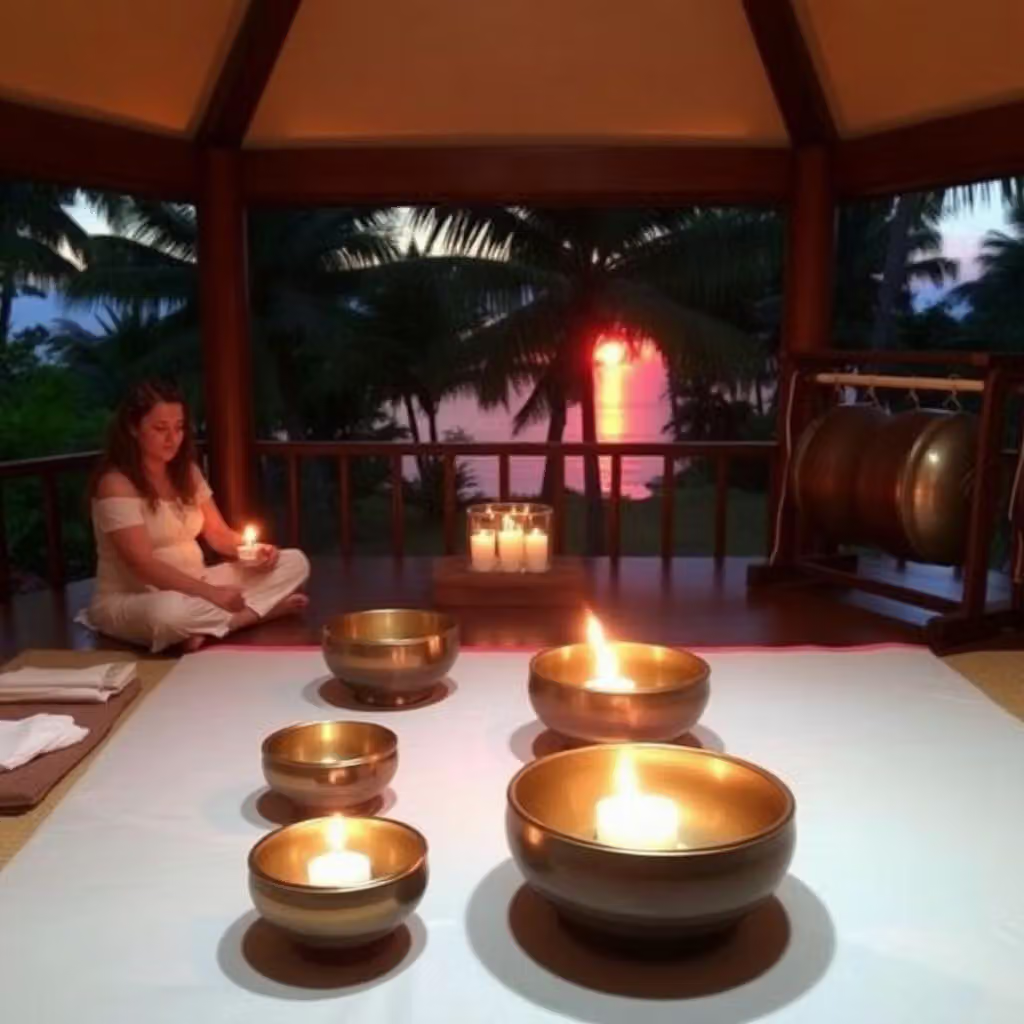
Co-hosting a yoga retreat lets two teachers combine their communities, share the work and offer guests a richer program, such as vinyasa from one teacher and yin, meditation or sound healing from the other. It works best when both hosts agree in writing on their roles, the teaching schedule, how costs and profit are shared and what happens if plans change.
- Two audiences. Each host invites their own students, so the room fills faster and the guest list is more varied.
- Complementary skills. A strong vinyasa teacher and a gifted meditation or yin teacher give guests more than either could alone.
- Shared work. Marketing, guest questions, planning and teaching are split between two people.
- Shared energy. On the retreat itself, two hosts can take turns teaching, resting and caring for the group.
Choosing the right co-host
The best co-host is not always your closest friend. Look for:
- Shared values. You should agree on what the retreat is for, how guests are treated and how much structure the week needs.
- Complementary styles. Different strengths make a better program than two versions of the same class.
- Similar audiences. Your communities should be comfortable with the same price, destination and pace.
- Reliability. Notice how quickly they reply, how they handle details and whether they keep promises.
- A trial run. Teach a joint workshop at home before committing to a week abroad together.
Questions to ask a potential co-host
- What do you want guests to feel at the end of the week?
- How many of your students do you realistically expect to book?
- How do you like to handle money, and how much risk are you comfortable carrying?
- How do you handle a difficult guest, a late cancellation or a change of plan?
- What do you need on a retreat to stay rested and teach well?
Sharing the teaching
Plan the practice as one arc across the week, not two separate programs. A simple pattern is to alternate who leads the morning and the evening, with both hosts at the opening and closing circles.
| Day | Morning | Evening |
|---|---|---|
| 1 | Arrival | Opening circle, both hosts |
| 2 | Vinyasa, host A | Yin, host B |
| 3 | Vinyasa, host B | Breathwork, host A |
| 4 | Slow flow, host A | Yoga nidra, host B |
| 5 | Vinyasa, host B | Meditation, host A |
| 6 | Gentle practice, host A | Closing circle, both hosts |
| 7 | Gratitude practice, host B | Departure |
Agree on the thread that ties the week together, such as a theme or an intention, so guests feel one retreat rather than two. Our guide to yoga and meditation retreats describes the practices you can draw on, and our sample yoga retreat itinerary shows how to pace the week around excursions.
Dividing the work beyond teaching
| Area | What it covers | Who |
|---|---|---|
| Marketing | Booking page, emails to your own lists, social posts | Both |
| Guest questions | One shared inbox, so nobody answers twice or not at all | One lead |
| Bookings and payments | Collecting payments into one account, with a shared record | One lead |
| Suppliers | Venue, transfers and excursions, or your retreat company | One lead |
| Guest care on the ground | Check-ins, dietary needs, health questions and problems | Both, by day |
| Content | Welcome pack, playlists, journaling prompts, photos | Split by strength |
Splitting the money
Money causes more co-hosting problems than anything else, usually because the split was assumed rather than agreed. Common models are:
- Equal partners. Both hosts share the costs, the risk and the profit, 50/50 or in an agreed ratio.
- Lead host and guest teacher. One host carries the risk and the profit and pays the other a fixed fee, plus travel and accommodation. A pricing framework for retreat leaders published on Yoga Alliance's website treats co-leaders and guest teachers as a cost line in this way.
- Split by bookings. Each host's share reflects the guests they bring, tracked with separate booking links or codes.
Whichever model you choose, build every host's fee, travel and accommodation into the price before you publish, and include a margin. The same framework suggests adding a sustainability margin of 10 to 20 percent to your costs. Our guide to how much to charge for a yoga retreat walks through the method.
A worked example
The figures below are illustrative, to show how the models compare.
| Equal partners | Lead host and guest teacher | |
|---|---|---|
| Guest revenue, 12 guests at $3,000 | $36,000 | $36,000 |
| Retreat costs, venue to excursions | $24,000 | $24,000 |
| Both hosts' travel | $3,000 | $3,000 |
| Card fees, about 3 percent | $1,080 | $1,080 |
| Guest teacher's fee | None | $2,500 |
| Profit to share | $7,920 | $5,420 |
| Each host receives | $3,960 each | Lead $5,420, guest teacher $2,500 |
In the equal model, both hosts also share the loss if the retreat does not fill. In the lead and guest model, the guest teacher's fee is fixed, and the lead host carries the risk.
Put it in writing: your co-hosting agreement
A short written agreement prevents most co-hosting problems. It does not need to be long, but it should cover:
- Roles, including who leads each area of work.
- The teaching schedule and who covers if one host is ill.
- Money, including who collects payments, which account they go into, who approves spending, the split and when payouts happen.
- Minimum numbers and the go or no-go date, and what happens if you cancel. Our guide to writing a yoga retreat cancellation policy covers the terms guests will see.
- Insurance, since each host needs their own teaching cover, and someone needs cover for organizing the trip. Our guide to yoga retreat insurance explains the difference.
- Marketing and content, including who owns photos and videos and the rule that each host keeps their own email list.
- Decisions and disagreements, including how you decide and what happens if you cannot agree.
- The future, including whether either host can run the same retreat alone next year.
If you plan to run retreats together regularly, talk to an accountant or a lawyer about structure. The Small Business Administration describes partnerships as the simplest structure for two or more people to own a business together, but notes that general partners carry unlimited personal liability. This is general information, not legal advice.
Marketing a retreat together
- One booking page with both hosts, the full itinerary, prices and terms, so guests see one retreat.
- A shared waitlist, with each host inviting their own community first.
- Each host emails their own list. The FTC's CAN-SPAM guide says both the business whose product is promoted and the one that sends the email may be held responsible, so both hosts should follow the rules, including a clear opt-out and a physical address.
- A joint live Q&A where guests meet both teachers.
- Track where bookings come from, especially if you split money by bookings.
Our guide on how to market a yoga retreat sets out a full launch plan you can share between two hosts.
A planning timeline to co-host a yoga retreat
| When | Both hosts agree or do |
|---|---|
| 10 to 12 months before | Destination, dates, price, the money model and the written agreement |
| 9 months before | The booking page, the shared waitlist and the teaching outline |
| 8 months before | A joint launch, with each host inviting their own community |
| 7 to 3 months before | Shared marketing, guest questions and a weekly check-in on bookings |
| The balance date | Final numbers, the teaching schedule and guest information |
| After the retreat | Payouts, a debrief and a decision about next year |

Red flags in a co-hosting partnership
- Vague answers about money, or a reluctance to put the split in writing.
- Very different expectations about price, comfort or the pace of the week.
- One host doing all the marketing while the other waits for bookings.
- Slow or unreliable communication before the retreat, which rarely improves on it.
- Disagreements in front of guests.
On the retreat: working as a team
- Check in every day, briefly and privately, about the group, the schedule and anything that needs attention.
- Give guests one point of contact for logistics, so questions do not bounce between hosts.
- Disagree in private. Guests should see one team.
- Protect each other's rest. Two hosts mean nobody has to be on duty all day.
- Debrief afterward, while the week is fresh, before you plan the next one.
Co-hosting with a retreat company
Many co-hosted retreats go wrong on logistics rather than teaching, because neither host wants to be the one chasing the venue. When a retreat company takes on the venue, transfers and excursions, both hosts can focus on what they do best: teaching and inviting their communities. The framework above calls this the wholesale and retail model, where the company quotes a cost per guest for the retreat and the hosts set the price their guests pay.
As a yoga retreat hosting company, we take the logistics off your hands whether you host alone or with a co-host. Our retreat planning services explain how we work with teachers, our free guide on how to host a yoga retreat abroad covers the full process, and you can browse our yoga retreat destinations or contact a retreat planner to talk through your plans.
Essential inquiries


Planning a retreat of your own?
Tell us about your group, your dates and the feeling you want the week to have. We will tell you honestly what it takes, what it costs, and where we would send you — even when the answer is somewhere we do not run.
- A real conversation, not a sales call
- Honest costing before you commit
- Itineraries shaped around your people